

- Last Updated:
- Network Security
What Is Network Security?
Network security is the coordinated use of technologies, policies, and processes to control access to networks, protect data exchanged across them, and support the secure and reliable operation of connected systems.
Network security uses layers of hardware, software, and administrative controls. These layers may include access management, firewalls, endpoint protection, secure configurations, monitoring tools, and policies that guide how people and systems use the network.
A network security system protects more than the physical network. It also covers users, connected devices, remote access, and cloud resources. The goal is to allow legitimate activity while preventing, detecting, or containing activity that could expose information or disrupt services.
Because no single safeguard addresses every risk, organizations usually combine preventive, detective, and responsive measures. The appropriate mix depends on the network architecture, the sensitivity of the information, business requirements, and the consequences of an interruption.
How Does Network Security Work?
Network security works by applying several checks before and during a connection and by monitoring activity throughout the session. These checks determine who or what is connecting, which resources can be accessed, whether the traffic is expected, and what should happen when suspicious behavior is detected.
Before access is granted, authentication and device checks establish trust. During a connection, access rules, firewalls, and segmentation govern how users, devices, and network traffic move through the environment, while encryption protects data in transit. During the connection, monitoring and detection tools record events, identify unusual patterns, and support an appropriate response. These layers can share context so that an access decision can change when conditions change. A user may pass authentication but still be denied access if the device is unmanaged, the request comes from an unexpected location, or the traffic matches a prohibited pattern.
Why Is Network Security Important?
Network security matters because a compromised network can provide a path to multiple systems and resources across an organization. A single unpatched virtual private network (VPN) gateway, an exposed management interface, or one compromised set of credentials can give an attacker a path to financial systems, customer databases, or operational infrastructure, even when individual applications are otherwise secured. Network security can help prevent that initial foothold from leading to broader access.
The importance of network security is also evident in real-world campaigns that exploit network infrastructure, such as Volt Typhoon. In 2024, U.S. and international cybersecurity agencies reported that Volt Typhoon often entered IT networks through previously disclosed vulnerabilities or zero-day flaws affecting internet-facing network appliances. U.S. agencies also reported indications that actors had retained footholds in some targeted organizations’ IT environments for at least five years and assessed that their positioning in IT networks was intended to support lateral movement to operational technology (OT) assets (Cybersecurity and Infrastructure Security Agency et al., 2024). Network segmentation can further reduce the spread of malicious activity by separating network resources and restricting movement between segments (Cybersecurity and Infrastructure Security Agency et al., 2023).
This highlights how network security can help limit the impact of a compromise. Threats and vulnerabilities require more detail than this overview provides. Learn how weaknesses and attack methods affect connected environments in this guide to network security threats and vulnerabilities.
Types of Network Security
Common types of network security include firewalls, network access control, network segmentation, antimalware protection, intrusion detection and prevention systems, virtual private networks, and cloud network security. Organizations combine multiple approaches based on their infrastructure, users, information, and risk profile.
Firewalls
A firewall is a hardware or software system designed to control and filter network traffic. Its purpose is to block unwanted traffic while allowing authorized communications to flow. Stateful firewalls evaluate active connections, while next-generation firewalls may add application awareness, content inspection, and threat-detection capabilities.
Network Access Control and Identity Management
Network access control determines whether a user or device may connect and what it can access after connection. Identity and access management (IAM) supports this process by managing identities, credentials, roles, and permissions. Together, these practices help ensure that only authorized users and compliant devices reach protected resources.
Network Segmentation
Network segmentation separates an environment into smaller groups that share a function or security requirement. Access to one group does not guarantee access to another. This separation can protect critical resources and make it harder for a compromised account or device to move freely through the network.
Antimalware Protection
Antimalware tools identify malicious software, including viruses, worms, and Trojans, and help prevent it from infecting networked systems. Effective protection also requires current detection methods, secure configuration, and a process for isolating and investigating affected devices.
Behavioral Analytics
Security teams establish a baseline for normal user, device, and application behavior. Behavioral analytics tools then look for activity that differs from that baseline, helping teams identify unusual access patterns or communications that require investigation.
Application Security
Application security uses secure development, configuration, testing, and access controls to protect software that connects to or operates across a network. These practices help reduce weaknesses that could expose data or provide an entry point into connected systems.
Data Loss Prevention
Data loss prevention (DLP) technologies identify sensitive information and apply rules to its use or transfer. Depending on policy, a DLP system may warn a user, block a transmission, quarantine content, or record an event for investigation.
Email and Web Security
Email security can block phishing attempts, unsafe attachments, and outbound messages that contain protected information. Web security tools can inspect links, downloads, and browsing activity so that malicious communications or compromised websites are less likely to become entry points into the network.
Mobile and Wireless Security
Mobile and wireless devices require additional scrutiny because they connect through radio-based networks and may operate outside an organization’s physical boundaries. Secure configuration, strong encryption, controlled authentication, and separation of guest or unmanaged devices can reduce exposure.
Intrusion Detection and Prevention Systems
An intrusion detection system (IDS) analyzes network traffic and generates alerts when it identifies suspicious behavior or known attack patterns. An intrusion prevention system (IPS) goes further by taking a configured action such as blocking traffic, ending a connection, or rejecting a request.
Security Information and Event Management (SIEM)
SIEM systems collect data from various network and security tools. By correlating events from multiple sources, SIEM platforms can help teams prioritize alerts, investigate incidents, and improve detection rules over time.
VPNs
A VPN creates an encrypted connection between an authorized device and a protected network or service. VPNs are commonly used for remote access and connections between sites, although access rules and endpoint protection remain necessary after the tunnel is established.
Cloud Network Security
Cloud network security applies access control, segmentation, encryption, traffic inspection, and monitoring to hosted resources. Because responsibilities are shared between the cloud provider and the customer, organizations must understand which identities, configurations, workloads, and data remain under their control.
Network Security Measures and Best Practices
Network security measures are most effective when they are implemented as a coordinated program. Clear ownership, documented procedures, employee awareness, and regular review help keep protective measures aligned with changes in the organization.
Apply Least-Privilege Access
Grant users, applications, and devices only the access needed for approved tasks. Review permissions when roles change, remove inactive accounts, and avoid broad administrative access where a narrower permission will meet the requirement.
Use Strong Authentication
Use multifactor authentication for sensitive systems and remote access. Protect service accounts, avoid shared credentials, and establish a controlled process for issuing, changing, and revoking access.
Keep Systems Securely Configured and Updated
Maintain supported software, apply security updates according to risk, and remove unnecessary services or default accounts. Standard configuration baselines make it easier to identify settings that have changed without authorization.
Encrypt Sensitive Connections
Use approved encryption for data moving across public networks, wireless connections, and links between sites or cloud environments. Certificate and key management should be part of the operational process rather than a one-time setup task.
Monitor Network Activity
Network monitoring can improve visibility, identify unusual bandwidth use, reveal slow or unreliable applications, and help teams detect suspicious communications. Monitoring should focus on actionable information rather than the volume of alerts alone.
Train Employees
Everyone with network access should understand how their actions can affect security. Training should cover phishing recognition, credential protection, secure handling of information, and timely reporting of suspicious activity. Policies and practical exercises can reinforce these expectations.
Test and Review the Program
Review firewall rules, access rights, segmentation boundaries, remote-access settings, and detection coverage on a defined schedule. Assessments and incident exercises can reveal gaps before an actual event requires the organization to depend on those safeguards.
Zero Trust and Network Security
What Is Zero Trust?
A zero trust approach does not automatically trust users or devices based on their location within a network. Before access is granted, users and devices must be authenticated and authorized, with least-privilege access limited to the resources needed to perform an approved task.
How Does Zero Trust Strengthen Network Security?
Zero trust integrates several key components such as identity and access management, strong authentication, network segmentation, endpoint security, and continuous monitoring. This creates a more robust approach for access decisions that can better prevent unauthorized access and contain threats by limiting lateral movement once an account or device has been compromised. It also allows access to be reevaluated based on changes to the user’s behavior, device status, and other factors.
Traditional Network Security vs. Zero Trust
| Traditional Network Security | Zero Trust |
|---|---|
| Relies primarily on perimeter-based controls | Does not assume trust based on network location |
| Internal users or devices may receive greater implicit trust | Users and devices are verified before access is granted |
| Access may remain broad after authentication | Access is limited according to least-privilege principles |
| Focuses heavily on traffic entering and leaving the network | Controls access and movement between internal resources |
| Security decisions may remain relatively static | Access can be reassessed as conditions change |
| A compromised device may reach multiple resources | Segmentation can limit lateral movement between resources |
It is important to emphasize that zero trust doesn’t replace current network security controls but offers an approach to apply access control, segmentation, authentication, and monitoring across users, devices, applications, and data.
Applications of Network Security Across Industries
Network security supports different operational and information requirements across industries. The underlying practices, including access control, segmentation, monitoring, and encryption, are similar across industries. What changes is which systems and data carry the most risk, and which regulations or consequences shape how an organization prioritizes its defenses.
Healthcare
Healthcare networks connect electronic health records, clinical systems, and medical devices, making patient data and care continuity the top priorities. Cyberattacks that disrupt clinical or IT systems can lead hospitals to divert patients or delay procedures (Mazanec, 2023), making network security a patient-safety issue, not just a data-protection one. Segmentation between clinical-device networks and general IT systems, along with strict access controls, helps contain an incident before it spreads across critical systems.
Law Firms
Law firms store privileged case files, client communications, and financial records that carry legal and reputational weight if exposed. Double-extortion attacks can combine data theft with encryption of systems or files and threats to release stolen information, increasing the impact of a breach beyond disruption. Encryption protects sensitive communications, while access controls and monitored remote access can help prevent unauthorized access and identify suspicious activity.
Media and Entertainment
Media and entertainment companies protect unreleased content, scripts, and masters from leaking before their intended release. A single leak can cause direct financial loss and strain relationships with talent and distributors. Segmenting production, post-production, and distribution systems doesn’t prevent every breach, but it limits how far a compromised account or device can move before it’s contained.
Food and Hospitality
Restaurants and hotels handle high volumes of payment card data alongside guest and reservation details, with point-of-sale and property-management systems adding to the attack surface. Network segmentation can separate payment systems from guest-facing and back-office networks, helping limit exposure if another part of the network is compromised. The Payment Card Industry Data Security Standard (PCI DSS) guidance also notes that properly implemented segmentation can reduce the number of systems within PCI DSS scope (PCI Security Standards Council, 2017).
Banking and Financial Services
Banking and financial services rely on online banking, mobile applications, and digital payments, creating multiple systems and interfaces that require protection. Credential theft and session hijacking techniques can give attackers unauthorized access to online and mobile banking environments. Network segmentation, access controls, secure connections, and continuous monitoring help restrict unauthorized access and surface potentially fraudulent or anomalous activity.
Network Security Salary
Network security engineer salaries vary by experience and industry.
Salary.com reports average annual salaries in the United States of roughly USD 111,000 for professionals with less than one year of experience, nearly USD 150,000 for those with 2–4 years of experience, and approximately USD 188,000 for those with 5–8 years of experience. The source also lists aerospace and defense, financial services, pharmaceuticals, software and networking, and telecom among the higher-paying sectors for network security engineers (Salary.com, 2026).
Certified Network Defender (CND): EC-Council’s Network Security Training Program
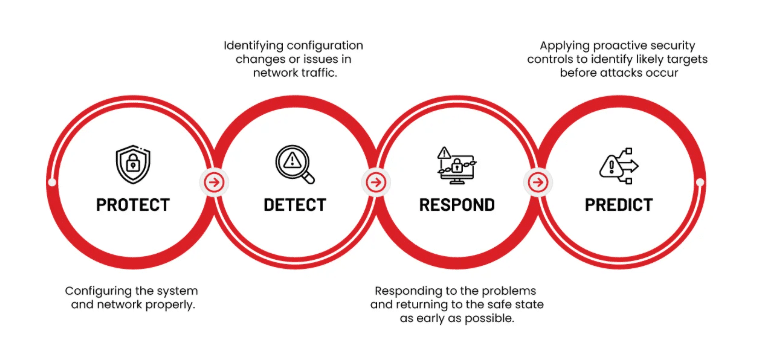
Effective network security depends on coordinated controls such as firewalls, segmentation, access controls, IDS/IPS, monitoring, and secure cloud configurations. Knowing what these controls do is only part of the work; defenders also need practice applying them across networks, endpoints, applications, and cloud environments. EC-Council’s Certified Network Defender (CND) curriculum connects these demands through its Protect, Detect, Respond, and Predict approach, covering perimeter and endpoint protection, traffic and log analysis, incident response, threat intelligence, threat hunting, and attack surface analysis.
The program reinforces this coverage through 100+ hands-on labs on live target machines, giving learners practical exposure to configuring defenses, analyzing network activity, and responding to security events. For professionals responsible for administering, monitoring, or defending networks, CND can help connect core network security concepts with hands-on defensive practice and may be worth a closer look.
Frequently Asked Questions
What is meant by network security and why is it important?
Network security involves implementing technologies, policies, and practices that protect networks and data while preserving their confidentiality, integrity, and availability. By preventing unauthorized access and reducing the risk of breaches and disruptions, organizations can support reliable operations.
What are the five types of network security?
Five common types of network security are firewalls, access control (IAM/NAC), network segmentation, intrusion detection/prevention systems (IDS/IPS), and virtual private networks (VPNs). Other categories include antimalware, data loss prevention (DLP), email/web security, security information and event management (SIEM), and cloud network security.
What are examples of network security?
Examples of network security include firewalls that filter network traffic and block unauthorized connections, VPNs that encrypt remote connections to a network, intrusion prevention systems (IPS) that can block suspicious traffic or known attack patterns, network segmentation strategies that isolate particularly sensitive systems from other parts of a network, and multifactor authentication measures that verify users before allowing access.
What are network security measures?
Network security measures are actions and controls organizations use to reduce network risk. Common examples include multifactor authentication, encryption, patch management, secure configuration, access reviews, monitoring and logging, and employee security training, among others.
What is the difference between network security and cybersecurity?
Cybersecurity is an umbrella term that involves securing digital assets such as networks, devices, applications, cloud environments, data, and more. Network security in cyber security is one component of this broader discipline, focusing specifically on protecting both the underlying network infrastructure and the traffic flowing over it.
References
Cybersecurity and Infrastructure Security Agency, National Security Agency, Federal Bureau of Investigation, & Multi-State Information Sharing & Analysis Center. (2023, October). #StopRansomware guide. https://www.cisa.gov/sites/default/files/2025-03/StopRansomware-Guide%20508.pdf
Cybersecurity and Infrastructure Security Agency, National Security Agency, Federal Bureau of Investigation, U.S. Department of Energy, U.S. Environmental Protection Agency, U.S. Transportation Security Administration, Australian Signals Directorate’s Australian Cyber Security Centre, Canadian Centre for Cyber Security, United Kingdom National Cyber Security Centre, & New Zealand National Cyber Security Centre. (2024, February 7). PRC state-sponsored actors compromise and maintain persistent access to U.S. critical infrastructure (AA24-038A). https://www.cisa.gov/sites/default/files/2024-03/aa24-038a_csa_prc_state_sponsored_actors_compromise_us_critical_infrastructure_3.pdf
Mazanec, B. M. (2023, May 16). HHS testimony on cybersecurity in healthcare infrastructure. U.S. Department of Health and Human Services. https://www.hhs.gov/about/agencies/asl/testimony/2023/05/2023/protecting-critical-infrastructure-from-cyberattacks.html
PCI Security Standards Council. (2017, May). Information supplement: Guidance for PCI DSS scoping and network segmentation (Version 1.1). https://listings.pcisecuritystandards.org/documents/Guidance-PCI-DSS-Scoping-and-Segmentation_v1_1.pdf
Salary.com. (2026, August 1). Network security engineer salary in the United States. Retrieved August 23, 2026, from https://www.salary.com/research/salary/listing/network-security-engineer-salary