
ROI Calculators: Quantifying Value for the Next AI Business Case
- Imran Afzal
- AI Program Manager
One of the most common reasons AI initiatives fail to move forward is not technical weakness, but uncertainty around business value. While data scientists and engineers often focus on model accuracy or system performance, executive decision-makers evaluate initiatives through a different lens. Their primary question is “What return will this investment deliver?”
Why ROI Is the Gatekeeper for AI Adoption
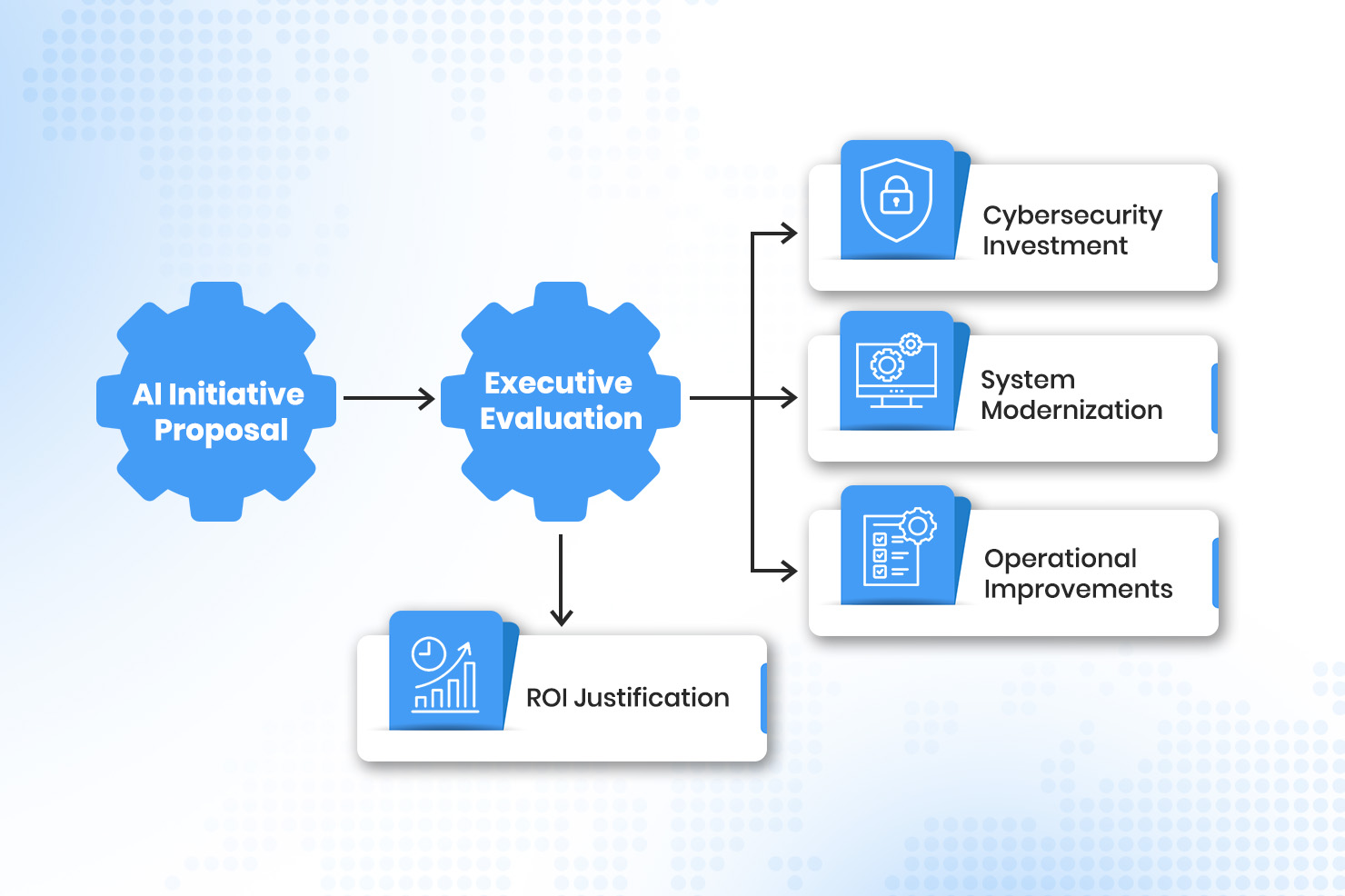
As AI adoption expands beyond experimentation, organizations are becoming more disciplined in how they allocate funding. AI projects now compete directly with other strategic initiatives such as system modernization, cybersecurity investments, and operational improvements. In this environment, enthusiasm for AI alone is not enough. Leaders need a clear, credible explanation of how AI will contribute to financial outcomes.
This is where ROI calculators become essential. An ROI calculator helps translate AI capabilities into business language. It connects technical outcomes to measurable value, such as reduced operating costs, increased productivity, improved revenue, or lower risk exposure. Without this translation, AI proposals often sound abstract, even when the underlying technology is sound.
Many program managers have seen this firsthand. An AI proof of concept may demonstrate impressive results in a lab setting, but without a financial narrative, it struggles to gain executive sponsorship. ROI calculators provide that narrative by framing AI as an investment rather than an experiment.
Importantly, ROI calculators introduce discipline early in the process by forcing teams to clarify assumptions, define success criteria, and consider costs alongside benefits. This up-front methodical approach not only improves approval rates but also sets realistic expectations for delivery.
By positioning ROI as the foundation of the AI business case, organizations shift conversations from excitement to accountability. This shift is critical for moving any AI initiative from idea to execution.
Identifying the Right Value Drivers for AI ROI
A strong ROI calculator starts with identifying the right value drivers. This step is where many AI business cases either gain credibility or fall apart. Without clearly defined value drivers, ROI estimates become vague projections rather than decision-ready insights. Program managers play a critical role in ensuring that AI benefits are tied directly to outcomes the business already understands and values.
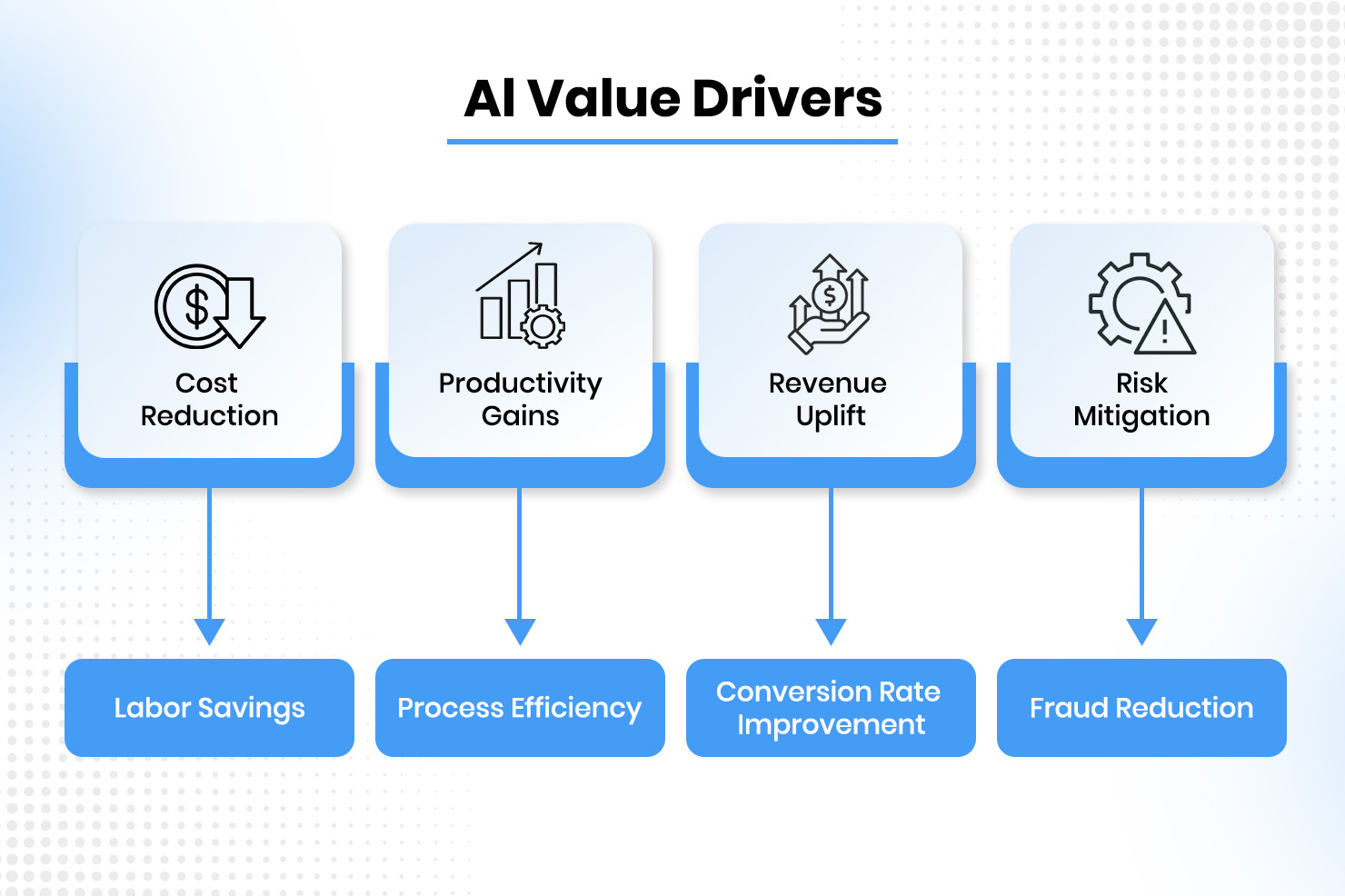
Common AI value drivers typically fall into a few broad categories. Cost reduction is often the most straightforward. Automation can reduce manual effort, lower error rates, and decrease reliance on external services. Productivity gains are another major driver. AI systems can help employees complete tasks faster, handle higher volumes of work, or focus on higher-value activities instead of repetitive tasks.
Revenue uplift is also a powerful driver, though it requires careful framing. AI may improve conversion rates, personalize customer experiences, or enable faster time-to-market. These benefits are real, but they must be grounded in realistic assumptions and historical data to gain credibility. Risk mitigation is another important but frequently overlooked driver. AI can reduce losses of fraud, improve compliance, or prevent operational failures, all of which carry measurable financial impact.
The key is prioritization. Not every AI initiative delivers value across all categories. Program managers should work closely with business leaders to identify which drivers matter most for the specific use case. This collaboration ensures alignment and prevents overinflated ROI claims.
A useful practice is to anchor value drivers to metrics the organization already tracks. When AI benefits are expressed in familiar financial or operational terms, executives are far more likely to engage and support the initiative.
Building Transparent and Credible Cost Models
While value often gets the spotlight in AI business cases, cost transparency is what ultimately determines credibility. Many AI initiatives stall after early enthusiasm because the true cost of ownership was not fully understood up-front. A strong ROI calculator must treat cost modeling with the same rigor as benefit estimation.
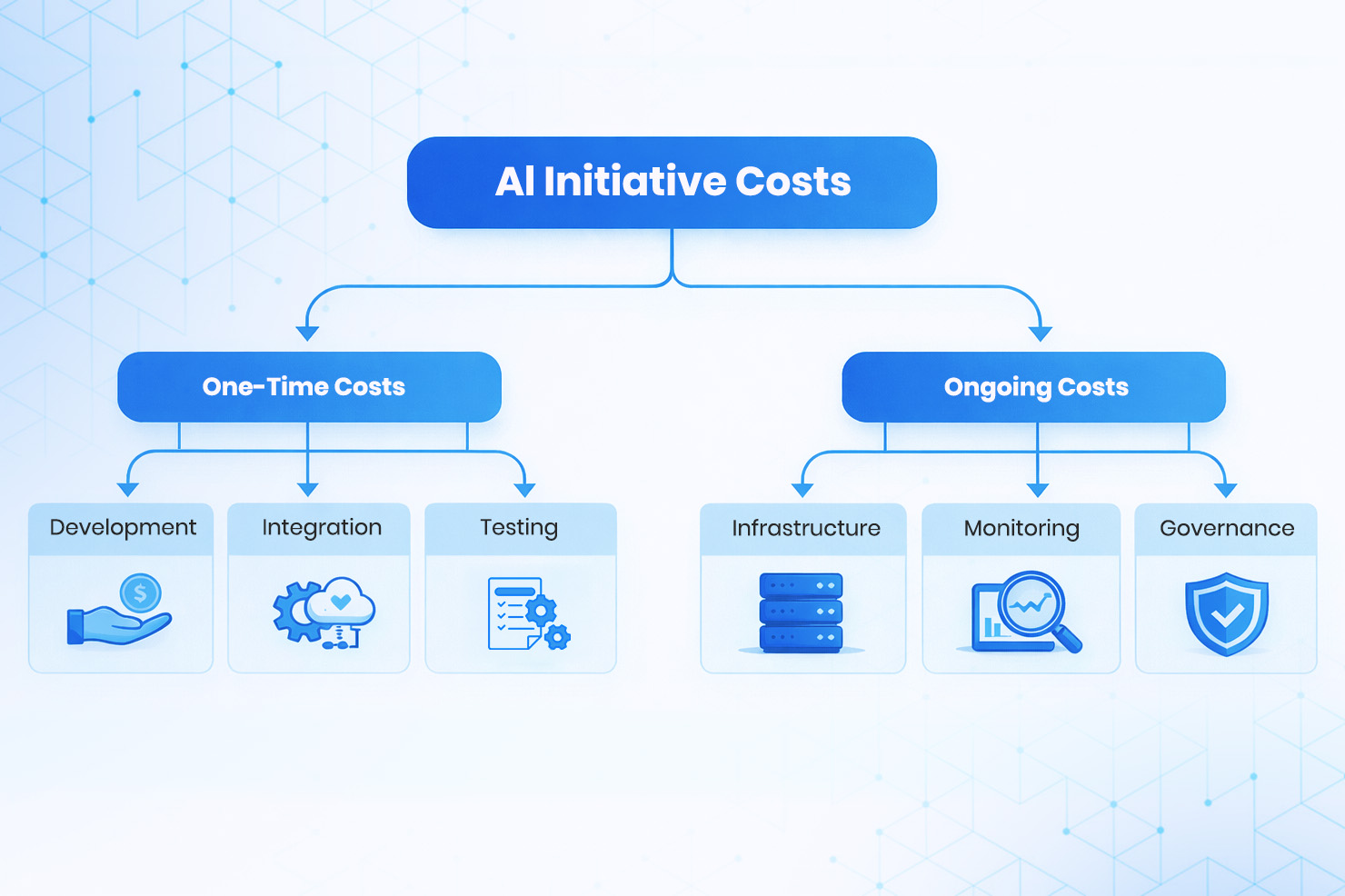
Program managers should begin by separating one-time costs from ongoing costs. One-time costs typically include model development, data preparation, system integration, and initial testing. These are often easier to estimate and are usually the focus of early planning discussions. However, many business cases fail to consider ongoing costs.
Operational expenses can include infrastructure usage, cloud services, data storage, monitoring tools, and licensing fees. Over time, these costs can exceed initial development expenses, especially as usage scales. Maintenance costs are another critical factor. Models require retraining, pipelines need updates, and performance must be monitored continuously. Ignoring these realities creates unrealistic ROI projections.
Governance-related costs should also be included. As organizations mature their AI practices, they invest in oversight processes, audits, security reviews, and compliance activities. While these costs may not be large individually, they contribute to the total cost of ownership and should be reflected in ROI models.
A common mistake is assuming AI systems behave like traditional software with minimal incremental cost. Program managers should challenge this assumption and ensure cost estimates reflect real operational behavior.
Transparent cost models build trust. When executives see that costs have been thoughtfully identified and clearly documented, they are far more likely to approve investments and support them over the long term. Credibility, not optimism, is what sustains AI funding.
Turning ROI Calculators into Executive Decision Tools
ROI calculators are often treated as approval artifacts, created once to justify funding and then forgotten. This approach limits their value. When used effectively, ROI calculators become executive decision tools that guide prioritization, trade-offs, and long-term investment planning for AI initiatives.
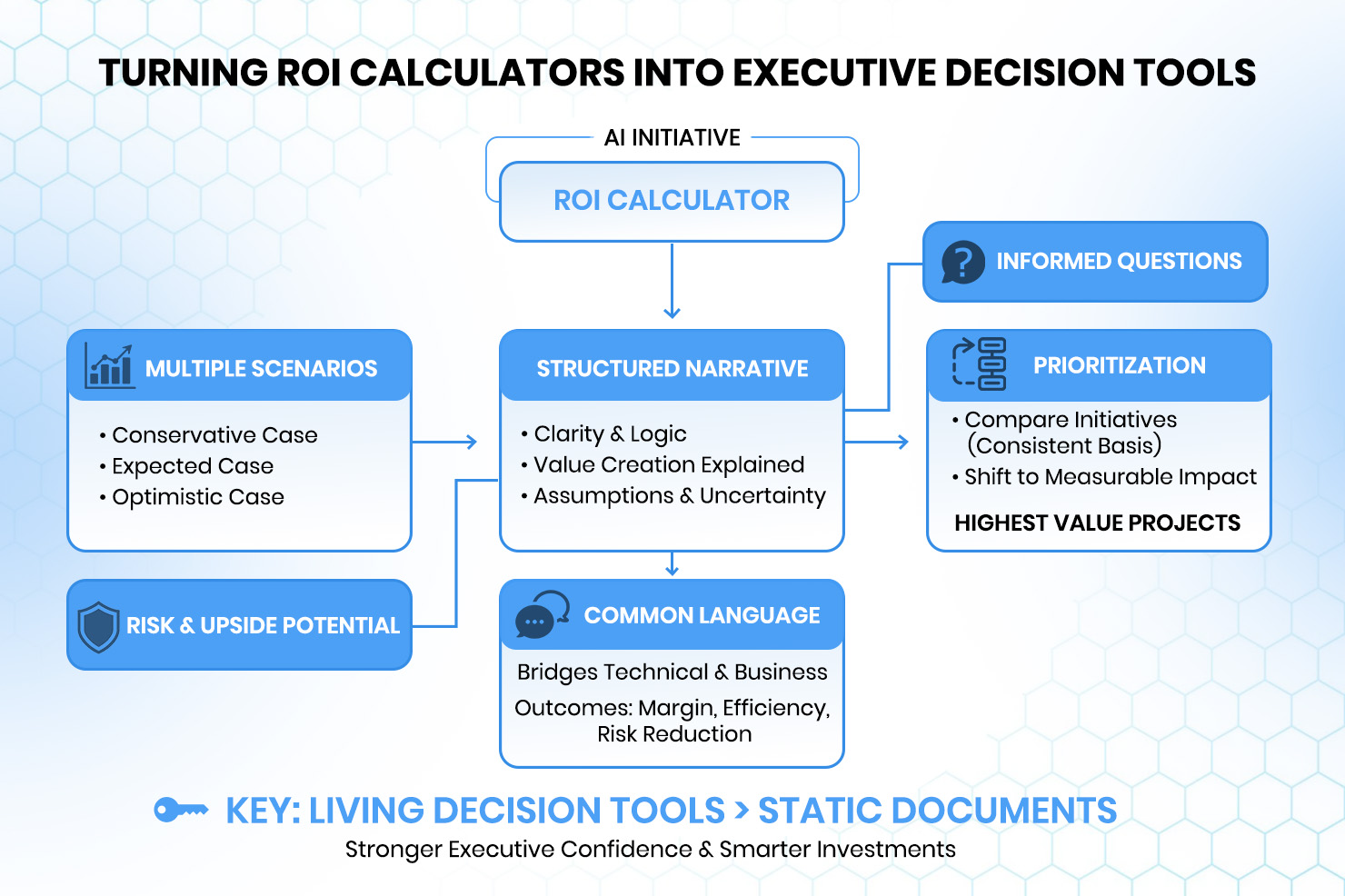
Executives rarely expect precision in early-stage forecasts, but they do expect clarity and logic. A well-designed ROI calculator provides a structured narrative that explains how value is created, what assumptions are being made, and where uncertainty exists. This transparency allows leaders to ask informed questions rather than reject proposals due to ambiguity.
Program managers play a key role in shaping this narrative. Instead of presenting ROI as a single number, they can use calculators to show multiple scenarios. Conservative, expected, and optimistic cases help executives understand risk exposure and upside potential. This framing aligns AI investments with how leaders already evaluate capital projects and strategic initiatives.
ROI calculators also support prioritization. When multiple AI proposals compete for funding, standardized ROI models help decision-makers compare competing AI initiatives consistently. This shifts conversations away from subjective enthusiasm and toward measurable impact. AI projects that deliver the highest value relative to cost naturally rise to the top.
There is also a benefit of communication. ROI calculators provide a common language that bridges technical teams and business leadership. They help data science efforts translate into outcomes executives care about, such as margin improvement, efficiency gains, or risk reduction.
When ROI calculators are positioned as dynamic decision tools rather than static documents, they strengthen executive confidence and enable smarter, more disciplined AI investments.
Using ROI Calculators After Deployment to Measure Real Value
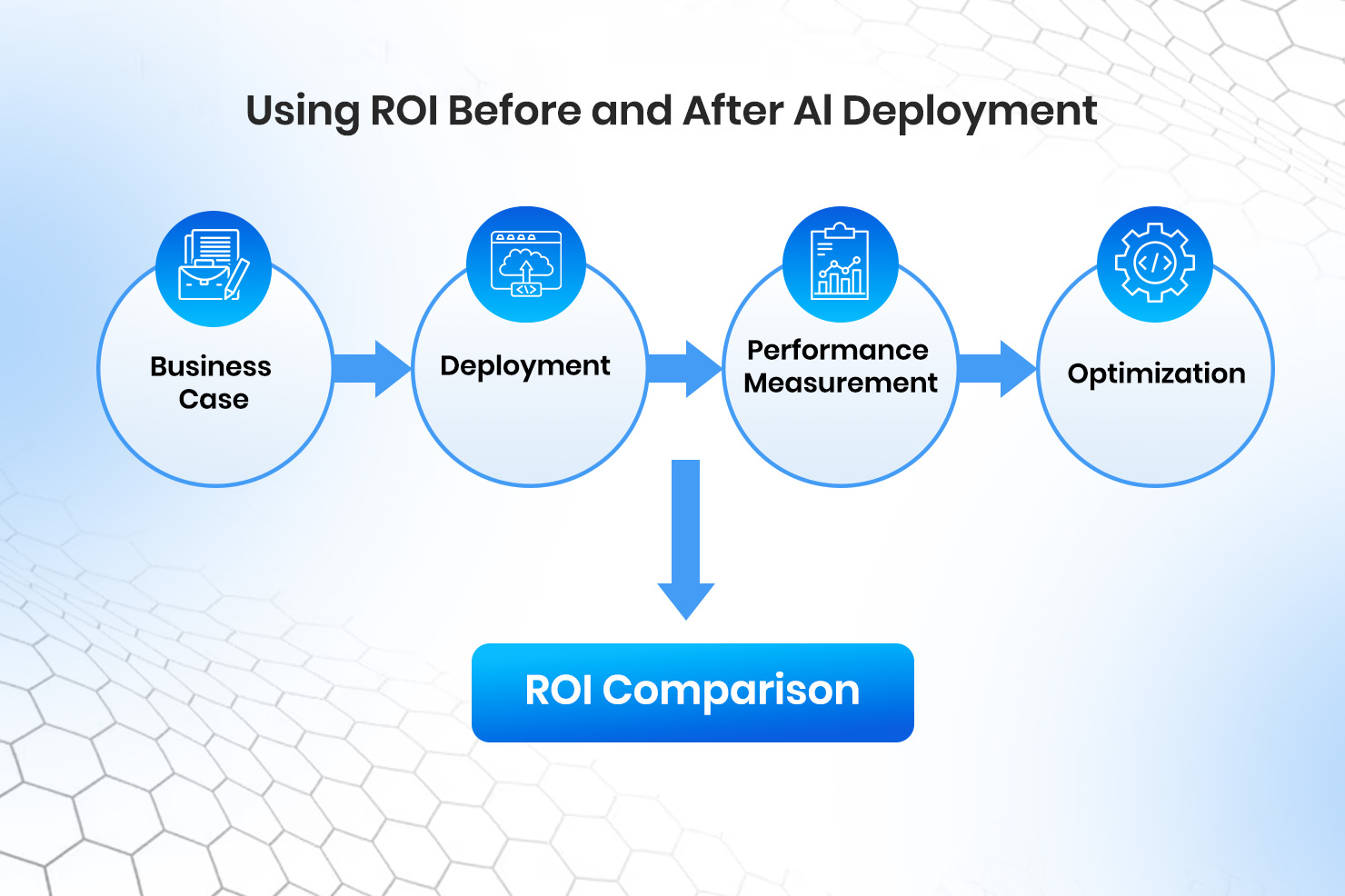
Many organizations stop using ROI calculators once an AI initiative is approved and deployed. This is a missed opportunity. ROI calculators are not just planning tools; they are powerful instruments for ongoing management and accountability. When revisited after deployment, they help organizations determine whether expected benefits are actually being realized and where course correction is needed.
After an AI system goes live, assumptions made during the business case stage can be tested against real operational data. Productivity gains, cost reductions, or revenue improvements can be measured and compared against original projections. This comparison provides valuable insight into what worked, what did not, and why. Program managers can then adjust priorities, optimize workflows, or refine models based on evidence rather than intuition.
ROI calculators also help identify value leakage. In some cases, AI systems perform well technically but fail to deliver expected returns due to adoption issues, process misalignment, or incomplete integration. By tying performance metrics back to financial outcomes, program managers can pinpoint where value is being lost and take targeted action.
There is also a learning benefit. Post-deployment ROI reviews improve future AI business cases. Assumptions become more accurate, cost estimates become more realistic, and value drivers become clearer over time. This creates a virtuous cycle where each AI initiative strengthens the organization’s ability to invest wisely in the next one.
Most importantly, using ROI calculators after deployment reinforces accountability. AI initiatives are no longer judged solely on delivery but on sustained impact. This mindset builds long-term confidence in AI programs and encourages disciplined scaling rather than unchecked expansion.
Building Long-Term Confidence in AI Through ROI Discipline
Long-term confidence in AI does not come from isolated successes or impressive demonstrations. It is built through consistent evidence that AI investments deliver measurable value over time. ROI discipline is what turns AI from a series of experiments into a trusted component of the organization’s strategic toolkit.
When organizations consistently apply ROI calculators across AI initiatives, they establish a repeatable decision-making framework. Leaders gain visibility into which types of use cases generate the most value, which cost structures scale effectively, and which risks undermine returns. This insight allows organizations to invest more confidently and avoid repeating costly mistakes.
Program managers are central to sustaining this discipline. By ensuring ROI expectations are defined early, measured regularly, and reviewed transparently, they help create a culture of accountability. This approach incentivizes teams to design solutions that integrate smoothly into operations rather than optimizing models in isolation.
ROI discipline also strengthens trust across stakeholders. Executives see that AI investments are governed with the same attention as other capital initiatives. Business teams understand how AI supports their objectives. Technical teams gain clarity on what success looks like beyond model performance. This shared understanding reduces friction and accelerates adoption.
Over time, organizations that apply ROI discipline develop a more mature AI portfolio. They scale initiatives that consistently deliver value and retire those that do not. This balance of ambition and restraint is essential for sustainable growth.
Ultimately, ROI calculators are not just financial tools. They are instruments of trust, alignment, and long-term confidence. When used consistently, they ensure AI remains a value-driven capability rather than a speculative investment.
About the Author

Imran Afzal
Imran Afzal, CEO of UTCLI Solutions and a best-selling IT instructor, has trained over a million students worldwide in IT, systems administration, and career development. An educator, mentor, and entrepreneur, he brings over 25 years of experience in systems engineering, leadership, and training across Fortune 500 companies in finance, fashion, and tech media.
His IT journey began in 2001 at Time Warner, NYC, and has since included leading major projects like data center migrations, VMware deployments, monitoring tool implementations, and Amazon cloud migrations. Imran holds a degree in Computer Information Systems from Baruch College (CUNY) and an MBA from NYIT.
Certified in Linux System Administration, VMware, UNIX, and Windows Server, Imran has been training students since 2010 through top-rated online courses and on-site programs. His mentorship has helped thousands secure IT jobs.
Beyond IT, Imran is dedicated to education and community service, founding a nonprofit school for children (pre-K to 10th grade).