Governance ROI: The Cost of Noncompliance Versus the Cost of Certification
- Brian C. Newman
- AI Program Manager
Enterprise leaders rarely argue that AI governance is unnecessary. The debate is quieter and more pragmatic. Is the cost of governance justified relative to competing priorities? Does it slow down delivery? Does it introduce friction without measurable return?
These are reasonable questions. They are also incomplete.
The real comparison is not between governance investment and zero cost. It is between intentional governance and the accumulating cost of unmanaged risk. When framed correctly, governance ROI becomes less about compliance spend and more about execution economics.
Let’s look at that trade-off, not in abstract regulatory terms, but through the operating costs leaders absorb when AI governance is weak or delayed. It also explains why certification, when tied to execution discipline, represents a predictable and often underestimated return.
The Question Leaders Are Actually Asking
When governance proposals stall, it is rarely because leaders doubt regulatory pressure. It is because governance costs are immediate and visible, while failure costs are distributed and delayed.
Budgets see:
- Training fees
- Time away from delivery
- Process design effort
- Oversight roles
They do not immediately see:
- Delays caused by late risk intervention
- Rework from blocked deployments
- Executive time lost in escalations
- Audit friction
- Erosion of trust between teams
Governance ROI is misunderstood because the downside of noncompliance is rarely labeled as such. It appears as inefficiency, friction, and organizational drag.
The Hidden Cost Structure of AI Noncompliance
Most AI governance failures do not begin with fines or enforcement. They begin with decision ambiguity.
Common cost centers include:
- Late-Stage Rework: Technical validation alone may miss risks, leading to costly redesigns, vendor changes, and lost momentum when issues are found late, such as legal uncovering problematic data retention in a chatbot.
- Procurement Delays: Unclear risk ownership can stall contracts for months, as legal asks for information no one owns and vendors cannot supply, pausing delivery until accountability is set.
- Audit Churn: Poor documentation causes repeated clarifications and wasted effort, with teams recreating records under audit pressure and leadership diverted from strategy.
- Shadow AI Remediation: Bypassing governance results in expensive fixes, as unsanctioned AI deployments later require significant remediation when issues like improper data use are discovered.
- Leadership Distraction: Incidents draw leaders into crisis management, eroding confidence and wasting time on reactive briefings instead of strategic work.
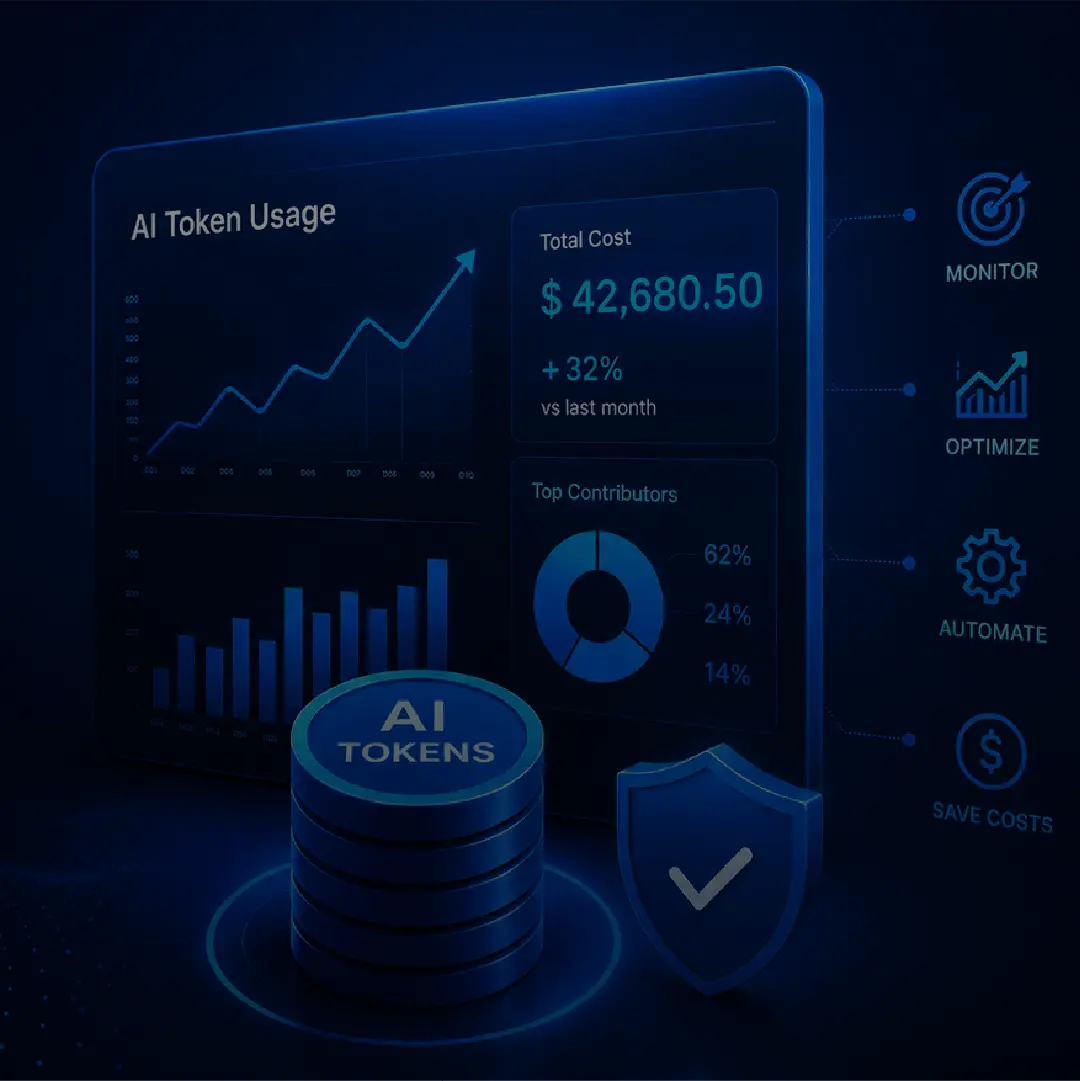
None of these line items appears as a single budget entry. Together, they often exceed the visible cost of governance investment. For a mid‑sized enterprise AI program expected to generate around $1–3 million in annual efficiency gains, a two‑month deployment delay can reasonably translate into roughly $200,000–$500,000 in unrealized delivery capacity, before even accounting for opportunity cost or competitive erosion.
Why Waiting Is the Most Expensive Option
A common enterprise instinct is to delay governance until regulation or scale forces action. This approach feels rational in the short term. It is consistently expensive in the long term.
Retrofitting governance costs more because:
- Architectural decisions are already locked.
- Vendors are contractually embedded.
- Teams resist changes that threaten delivery milestones.
- Controls must be layered onto systems not designed for them.
Emergency governance is rarely elegant. It is brittle, manual, and hard to scale. It satisfies immediate scrutiny but increases long-term operating costs.
Shadow AI remediation typically demands three to five times more effort than upfront governance. Early risk assessment and vendor requirements could avoid lengthy programs involving legal review, contract changes, technical migration, and stakeholder updates.
Delaying governance leads to higher costs and accumulating debt. Every unchecked AI deployment and contract without proper provisions adds to future work, while unclear accountability increases coordination efforts.
The inflection point arrives when the accumulated cost of managing fragmented governance exceeds what intentional design would have cost. By then, organizations are paying for both ongoing dysfunction and remediation.
Governance as an Operating Capability
The shift enabled by mature AI governance is not compliance coverage. It is predictability. Governance, when designed as an operating capability, changes how decisions are made. It clarifies:
- Who owns risk decisions
- When review is required
- What evidence is sufficient
- How trade-offs are evaluated
This clarity reduces surprises, shortens approval cycles, and enables teams to design with constraints rather than discover them later.
From an ROI perspective, governance improves decision velocity with confidence. That combination is rare and valuable.
Consider two scenarios illustrating this difference.
Low Governance Maturity: The proposal for an AI claims processing assistant advances through initial reviews but faces legal compliance concerns near launch. Risk classification and approval authority are undocumented, causing a pause while a working group assesses the project. Conditional approval arrives with 18 requirements, half involving architecture, resulting in a four-month delay.
High Governance Maturity: The product team identifies the claims processing assistant as high-risk, activating a structured review with clear roles. Legal, risk, and compliance join in architecture planning, and vendor selection follows governance standards. Required controls are built in, allowing approval within three weeks and an on-schedule launch with full confidence.
The difference is not governance presence. It is governance integration.
What CAIPM Develops Inside Organizations
The Certified AI Program Manager (CAIPM) curriculum, developed and stewarded by EC-Council, is designed around this execution reality.
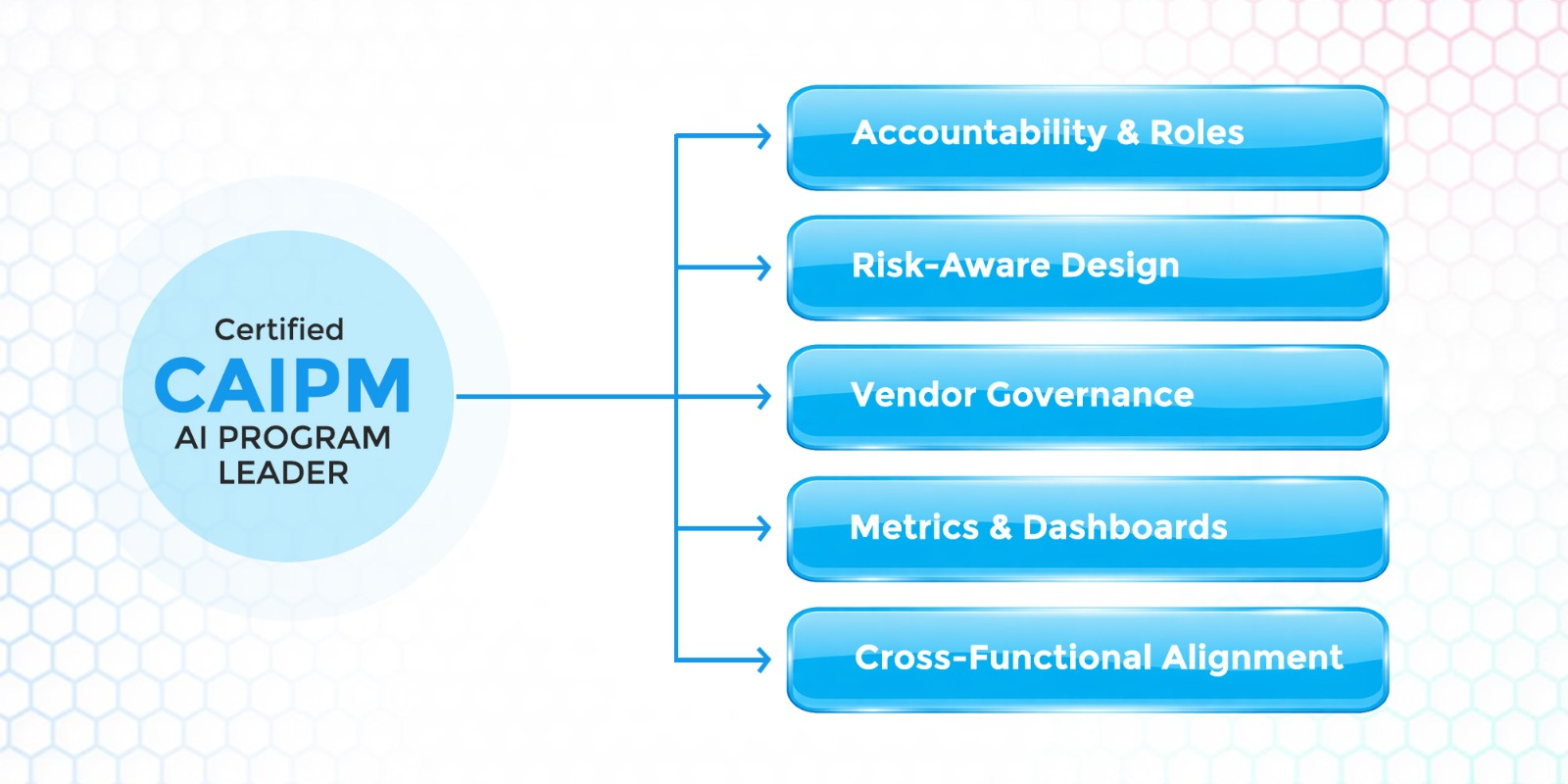
Rather than treating governance as a policy function, CAIPM positions it as a core program capability that directly addresses the hidden costs outlined above.
Leaders who complete the curriculum gain practical mastery in specific competency areas that measurably reduce governance friction and improve ROI.
Program Structure and Lifecycle Management: CAIPM graduates design AI programs with integrated governance, structuring processes so risks are addressed early, avoiding late-stage changes.
Accountability Architecture: Graduates define clear ownership roles, aligning accountability with existing structures to prevent decision delays and eliminate ambiguity.
Risk-Based Governance Design: CAIPM trains leaders to tailor governance based on risk, streamlining low-risk approvals and ensuring high-risk applications receive proper oversight, thereby improving efficiency and ROI.
Cross-Functional Integration: Graduates coordinate governance across legal, security, privacy, product, and operations, aligning frameworks and criteria to eliminate bottlenecks and promote accessible governance.
Vendor and Third-Party Program Management: They establish robust third-party governance, embedding requirements in procurement and maintaining ongoing vendor accountability to avoid costly remediation.
Metrics and Performance Management: Leaders use business-centric metrics to measure and demonstrate governance effectiveness, supporting ROI visibility for executives.
Regulatory Interpretation and Program Adaptation: Graduates adapt programs to new regulatory demands without over-customization, future-proofing investments and minimizing rework.
These competencies combine to create program leaders who can operate AI governance at scale without slowing delivery. The ROI comes not from avoiding fines, but from eliminating the friction, rework, and coordination overhead that plague AI programs without disciplined governance.
Certification Cost Versus Enterprise Cost Curves
Certification has a known, bounded cost. Enterprise risk does not.
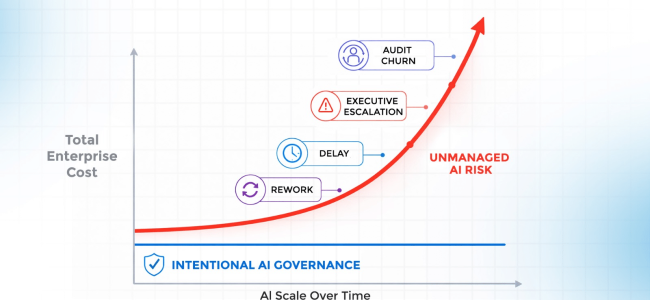
As AI adoption scales, unmanaged risk scales faster. Each new use case compounds exposure. Each vendor introduces variability. Each deployment increases scrutiny. Consider common enterprise scenarios: A model deployment paused after executive review because risk assumptions were undocumented. A vendor contract reopened when governance rights were unclear. A board inquiry triggered by inconsistent explanations of model behavior. A regulator request met with fragmented artifacts.
None of these scenarios requires regulatory penalties to be costly. The real cost lies in lost time, confidence, and organizational focus.
Certification investment is small relative to the cost curve of growing AI exposure without discipline. For context, the CAIPM certification represents a fraction of 1% of typical enterprise AI program budgets; yet, it addresses governance gaps that routinely add 10 to 20% to program costs through delays, rework, and coordination overhead.
Governance ROI in Board-Level Terms
Boards rarely ask about ethics frameworks. They ask about readiness, exposure, and control.
Governance ROI can be framed through metrics that boards recognize:
- Time to approval for high-risk AI initiatives
- Frequency of decision reversals or deployment blocks
- Audit readiness without emergency preparation
- Incident containment and response time
- Confidence in portfolio risk reporting
- Vendor governance coverage and compliance
Organizations with mature governance spend less time explaining decisions and more time executing them. This reduction in leadership uncertainty is one of the least visible but most valuable returns. When executives trust that AI programs operate within defined risk boundaries, they can focus on strategy and growth rather than intervention and damage control.
Why Certification Signals More Than Knowledge
Certification is often misunderstood as individual validation. In enterprise contexts, its value is collective.
Certification:
- Establishes shared language across functions
- Reduces dependence on single experts
- Creates consistency in decision logic
- Accelerates trust between teams
When multiple leaders share a common governance framework, decisions move faster with less friction. Disagreements are resolved within the structure rather than through escalation.
This is why certification often delivers ROI disproportionate to its cost. It reduces coordination overhead, which is one of the largest hidden costs in complex organizations.
The Cost of Noncompliance Is Already Accruing
Noncompliance is rarely binary. It accumulates.
It shows up as:
- Slower decisions
- Higher coordination cost
- Repeated justification cycles
- Defensive leadership behavior
- Erosion of delivery team confidence
These costs are often accepted as normal growing pains. They are not. They are symptoms of governance debt. The longer they persist, the harder they are to unwind.
Closing Perspective
Governance ROI is not theoretical. It is operational.
The cost of certification is predictable, bounded, and visible. The cost of noncompliance is diffuse, compounding, and often ignored until it is unavoidable.
AI governance is cheaper when designed intentionally. It is expensive when forced reactively.
Certification, when aligned to execution and accountability, is not an overhead cost. It is a controlled investment in organizational resilience and delivery confidence.
In the long run, governance is not what slows AI programs down. Recovery is.
About the Author

Brian C. Newman
Brian C. Newman is a senior technology and AI program practitioner with more than 30 years of experience leading large-scale transformation across telecommunications, network operations, and emerging technologies. He has held multiple senior leadership roles at Verizon, spanning global network engineering, systems architecture, and operational transformation. Today, he advises enterprises on AI program management, governance, and execution, and contributed to the design and instruction of EC-Council’s CAIPM and CRAGE programs.