
Introduction
Over the past two decades, cybersecurity has undergone one of the most dramatic transformations in modern business and technology. What was once considered a highly technical function focused on firewalls and antivirus software has evolved into a strategic discipline that influences business continuity, organizational resilience, national security, and executive decision-making.
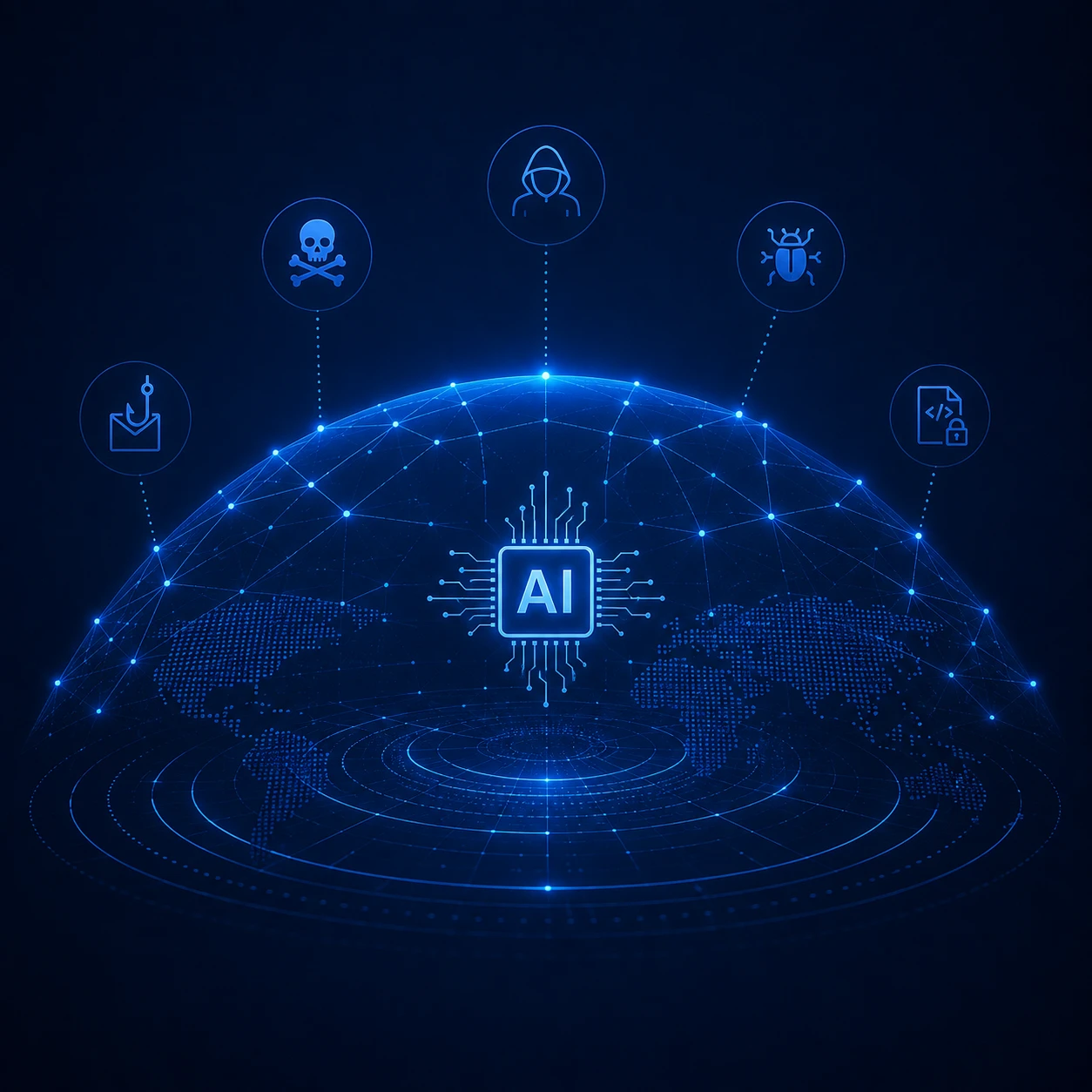
As organizations are embracing cloud computing, remote work, artificial intelligence (AI), and interconnected digital ecosystems, cyber threats are becoming more sophisticated, persistent, and impactful.
Twenty years ago, most cyberattacks were driven by curiosity, experimentation, ego, and the desire for recognition rather than financial gain. Today, organizations face highly organized cybercriminal enterprises, nation-state actors, and AI-powered adversaries operating at machine speed.
The traditional belief that strong perimeter defenses could keep attackers out has largely disappeared. Modern cybersecurity leaders now focus on resilience, rapid response, and maintaining operational continuity during and after cyber incidents.
This evolution has fundamentally changed how organizations approach risk management. Success is no longer measured by preventing every attack but by detecting threats quickly, responding effectively, recovering rapidly, and maintaining trust throughout the process. Understanding this transformation is essential for business leaders, cybersecurity professionals, and organizations preparing for the next generation of cyber threats.
From Curiosity to Cybercrime: The Commercialization of Cyber Threats
The first major shift in cybersecurity occurred when cyberattacks transitioned from curiosity-driven activities to financially motivated operations.
In the early days of the internet, many attackers sought recognition, prestige, or the challenge of proving their technical skills. Cybersecurity was largely viewed as a technical arena where individuals experimented with vulnerabilities and malware without necessarily seeking financial gain.
All this changed when attackers discovered that cybercrime could generate significant revenue. Malware campaigns, phishing attacks, credential theft, and ransomware operations became profitable business models. Cybercriminals realized they could exploit trust, connectivity, and digital infrastructure to create scalable revenue streams. Incidents such as large-scale email-based malware outbreaks demonstrated how quickly cyber threats could spread across organizations worldwide, causing disruption at an unprecedented scale.
As profits increased, cybercrime evolved into a sophisticated industry. Criminal organizations adopted business structures, specialized roles, and operational processes similar to legitimate technology companies. The emergence of ransomware-as-a-service allowed attackers with limited technical expertise to launch highly sophisticated attacks using tools developed by experienced cybercriminals. This industrialization of cybercrime dramatically increased the volume, frequency, and effectiveness of cyberattacks, forcing organizations to rethink their security strategies.
The rise of organized cybercrime also introduced a new level of professionalism among attackers. Many criminal groups began operating support desks, affiliate programs, revenue-sharing models, and customer service portals. This transformation blurred the line between criminal enterprises and legitimate businesses, creating an ecosystem capable of scaling attacks globally.
For organizations, the consequences were significant. Cybersecurity was no longer simply an IT issue. It became a business risk capable of disrupting operations, damaging reputation, and causing substantial financial losses. Leaders increasingly recognized that cybersecurity required executive attention and strategic investment.
The commercialization of cyber threats established the foundation for today’s cybersecurity landscape. It created an environment where innovation on the attacker side accelerated continuously, forcing defenders to adapt just as quickly.
The Rise of Nation-State Threats and AI-Powered Cyber Warfare
The second major transformation occurred when cyber operations expanded beyond financial crime and became tools of geopolitical influence. Nation-state actors began using cyber capabilities to achieve strategic objectives, including intelligence gathering, infrastructure disruption, economic pressure, and long-term surveillance.
Unlike traditional cybercriminals, nation-state groups often prioritize persistence and strategic advantage over immediate financial gain. Their objectives may include compromising government agencies, critical infrastructure providers, defense contractors, and major enterprises. These actors possess significant resources, advanced capabilities, and long-term operational planning that make them particularly challenging to defend against.
One of the most important developments during this period was the rise of supply chain attacks. Instead of targeting individual organizations directly, attackers learned to compromise trusted software providers, cloud platforms, and third-party vendors. By exploiting trust relationships, they could gain access to thousands of organizations simultaneously. This approach demonstrated that cybersecurity risks extend far beyond an organization’s internal environment and include every partner, supplier, and technology provider within its ecosystem.
At the same time, AI began reshaping the cyber threat landscape. AI enables attackers to automate reconnaissance, identify vulnerabilities, generate convincing phishing messages, and adapt malware faster than ever before. Tasks that once required teams of skilled operators can now be executed automatically and continuously.
AI-powered phishing campaigns are particularly concerning because they can generate highly personalized content with remarkable accuracy. Attackers can analyze social media profiles, public information, and organizational data to craft messages specifically designed to deceive individual targets. Deepfake technologies further amplify these risks by creating realistic audio and video impersonations that can manipulate employees and executives.
Perhaps the most significant challenge introduced by AI is the compression of attack timelines. Vulnerabilities can now be weaponized within hours of disclosure. Organizations that rely on slow decision-making processes and manual workflows struggle to keep pace with adversaries operating at machine speed. As a result, AI-powered defense capabilities have become increasingly necessary for modern cybersecurity programs.
The Future of Cybersecurity: Resilience, Leadership, and Continuous Adaptation
From Prevention to Resilience
As cyber threats continue to evolve, cybersecurity strategies have shifted from prevention-focused models to resilience-driven approaches. Traditional perimeter-based security assumed that attackers could be kept outside organizational networks. However, cloud computing, remote work, mobile devices, and interconnected systems have effectively dissolved the traditional perimeter.
This reality has given rise to concepts such as Zero Trust, which operates on the principle of “never trust, always verify.” Rather than automatically trusting users or devices based on their location, organizations continuously validate identities, permissions, and behaviors. Zero Trust has become an important framework for reducing risk in highly distributed environments.
Even more important is the growing emphasis on resilience. Modern organizations increasingly assume that some level of compromise is inevitable. Instead of focusing exclusively on prevention, they prioritize detection, response, recovery, and business continuity. The goal is not perfection but operational survivability.
The Evolving Role of the Cybersecurity Leader
This shift has also transformed the role of the Chief Information Security Officer (CISO). Today’s CISO is no longer simply a technical leader responsible for security tools and compliance programs. Modern cybersecurity leaders must communicate business risk, influence executive decision-making, support organizational growth, and translate technical threats into financial and operational impact.
Effective cybersecurity leadership now requires a deep understanding of business strategy, governance, regulatory requirements, and organizational culture. Leaders must work closely with boards, executives, and business units to ensure cybersecurity supports broader organizational objectives rather than functioning as an isolated technical department.
Preparing for the Next Decade
Looking ahead, organizations must focus on three critical priorities: increasing speed, improving visibility, and strengthening resilience. Rapid detection and response capabilities are essential in a world where attacks unfold in minutes. Comprehensive visibility across assets, identities, cloud environments, and third-party relationships is necessary to reduce blind spots. Most importantly, organizations must build resilient cultures capable of adapting to continuous disruption.
Cybersecurity is no longer a destination or a compliance exercise. It is an ongoing operational discipline that requires constant learning, adaptation, and leadership commitment. Organizations that embrace resilience, invest in preparedness, and align cybersecurity with business strategy will be best positioned to navigate the challenges of the next decade.
Conclusion
The last 20 years have transformed cybersecurity from a technical specialty into a strategic business function. The evolution from curiosity-driven hacking to organized cybercrime, nation-state operations, and AI-powered attacks has fundamentally changed the threat landscape. Organizations can no longer rely solely on prevention. Instead, they must prioritize resilience, speed, visibility, and leadership.
As technology continues to evolve, cybersecurity will remain a dynamic and challenging field. Success will depend on an organization’s ability to adapt continuously, respond effectively under pressure, and maintain trust in an increasingly complex digital world. The future belongs not to those who believe they can eliminate all threats, but to those who can recover, adapt, and thrive despite them.