

- Last Updated:
- EC-Council
- Ethical Hacking
Android hacking courses teach learners how to analyze, test, and secure Android systems using many of the same techniques as real-world attackers, but only within authorized engagements with clearly defined scopes. According to Kaspersky, attacks on Android smartphone users increased by 29% in the first half of 2025 compared with the first half of 2024 (Kaspersky, 2025), highlighting the growing importance of mobile security.
This article explores how authorized Android security testing works within Android systems, 10 common Android hacking tools, and eight courses to learn Android hacking at the beginner, intermediate, and advanced levels.
8 Courses to Learn Android Hacking in 2026: Beginner to Advanced
CEH AI for Android Hacking and Mobile Security Skills
Course 1: Certified Ethical Hacker ( CEH AI)
CEH AI provides a structured way to learn Android hacking as part of a broader ethical hacking curriculum. Its mobile-platform security content covers how attackers target mobile platforms, including Android devices, and examines the anatomy of mobile attacks and related techniques.
Learners study Android and mobile security topics, including:
- SMS phishing (smishing) and call spoofing
- One-time password (OTP) and two-factor authentication hijacking
- Camera and microphone capture attacks
- Android rooting
- App sandboxing issues
- The OWASP Mobile Top 10 2024 and its relevance to mobile application security
The hands-on labs provide opportunities to apply this knowledge. In authorized lab environments, learners:
- Hack an Android device by creating binary payloads
- Exploit the Android platform through the Android Debug Bridge (adb)
- Create an APK file to test an Android device
- Secure Android devices with Android security tools
Working through both offensive and defensive techniques helps learners understand what unauthorized access looks like, how Android weaknesses are exploited, and which countermeasures can reduce risk.
Beyond Android, CEH AI connects mobile security to the broader ethical hacking lifecycle through a 20-module curriculum, more than 550 attack techniques, access to more than 4,000 hacking and security tools, and 221 hands-on labs. Other modules include system hacking, malware threats, social engineering, web server hacking, web application hacking, SQL injection, wireless network hacking, cloud computing, Internet of Things (IoT) and operational technology (OT) hacking, and cryptography.
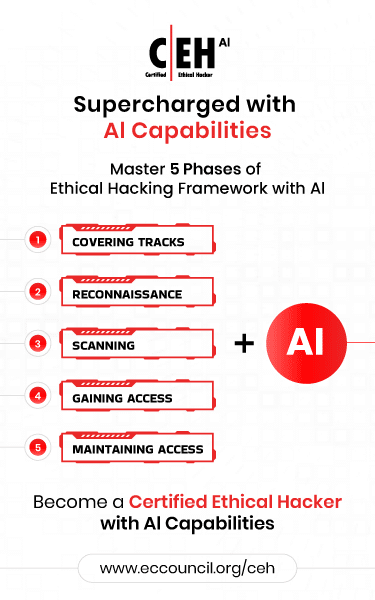
Its AI component shows how AI can support ethical hacking across all five phases. Learners also examine AI systems as part of the modern attack surface and learn how these systems can be attacked, assessed, and secured in authorized lab environments.
Android Hacking Courses for Beginners
The following two courses are suitable for learners who are building foundational mobile security skills. Each includes beginner-level Android hacking content covering fundamentals and hands-on testing.
This beginner-friendly course introduces Android bug bounty hunting and a structured methodology for discovering and assessing mobile vulnerabilities.
Throughout the course, learners:
- Set up an Android bug bounty testing lab
- Apply an effective bug bounty methodology
- Examine key bug bounty challenges
- Learn about path variables and essential testing tools
- Develop a structured approach to testing Android applications
For aspiring mobile security researchers, this one-hour Android hacking course serves as a practical introduction to Android bug bounty hunting and the processes used to identify and responsibly report vulnerabilities.
This course covers attacks against mobile devices and applications, defensive methods, and the creation of a secure lab environment using virtual machines and Kali Linux.
The course covers a wide range of mobile security topics, including:
- Android and iOS fundamentals
- Java and Swift programming fundamentals
- Android rooting and iOS jailbreaking
- Reverse engineering mobile applications
- Cloud security with Firebase
- Network-based attacks and mobile penetration testing
- Capture the Flag (CTF) challenges and practical security assessments
With 22 hours of video content, this mobile hacking course is well suited for aspiring mobile security professionals, penetration testers, developers who want to build more secure applications, and cybersecurity practitioners seeking to expand their expertise into mobile security.
Android Hacking Courses for Intermediate Learners
These intermediate-level courses move beyond general introductions and focus on applied skills, including malware analysis, application testing, and structured bug bounty work.
Course 4: Android Security for Absolute Beginners
This intermediate-level Android malware analysis course begins with Android security, attack surfaces, and Kali Linux lab setup before moving into mobile attack vectors and application reverse engineering.
Other key topics include:
- Android security architecture
- Android attack surfaces and mobile attack vectors
- Static and dynamic malware analysis
- Reverse engineering APK files
- Detecting malicious behavior and data exfiltration code
- Using Kali Linux tools for Android security analysis
With more than 1.5 hours of video content, the course also includes hands-on analysis of Android applications, helping learners apply malware analysis techniques in real-world scenarios.
This Android ethical hacking course introduces Android application analysis, vulnerability discovery, and penetration testing techniques.
Key topics include:
- Android Studio, emulators, and adb fundamentals
- APK decompilation and application analysis
- Insecure logging and hardcoded secrets
- Insecure data storage practices
- Input validation weaknesses
- Attack surface identification
- Access control vulnerabilities
- Content provider injection issues
- drozer for Android security testing
- Bug hunting techniques and best practices
The course emphasizes common security issues in Android applications. By the end of this 1.5-hour course, learners develop skills for identifying common vulnerabilities and conducting Android application assessments.
Course 6: Hands-on Android Security
This course begins with Android architecture, storage, hardware security, and native applications before moving into application analysis, common vulnerabilities, and mobile device risks.
Key topics include:
- Android architecture and data structures
- Hardware security components
- Android application analysis
- Mobile security threats and risks
- Android vulnerability assessment
- Practical Android attack techniques
With 3 hours of video content, the course uses practical exercises to show how vulnerabilities can be identified and tested in Android environments.
This intermediate-level course covers the end-to-end bug bounty process, from target selection and reconnaissance to vulnerability discovery and report writing across web, mobile, and IoT environments.
Key topics include:
- Target selection and bug bounty reconnaissance
- Vulnerability discovery methodologies
- Web, mobile, and IoT security vulnerabilities
- Report writing and vulnerability disclosure best practices
- Methods for identifying bugs in bug bounty programs
With more than 4 hours of video content, the course combines hands-on exercises with techniques used in practical bug bounty work.
Android Hacking Course for Advanced Learners
The course below is listed as advanced and focuses on identifying vulnerabilities using commonly used Android penetration testing tools.
This advanced course covers Android application analysis and vulnerability identification while providing hands-on experience with several Android hacking tools commonly used in Android penetration testing and bug bounty engagements.
Key topics include:
- Android application penetration testing
- Common Android vulnerabilities
- Static and dynamic analysis techniques
- Android application security best practices
- Tools such as drozer, dex2jar, jadx, Apktool, adb, and Burp Suite
- Vulnerability discovery and bug bounty workflows
By using Android security tools to examine weaknesses common in mobile applications, learners practice discovering and assessing vulnerabilities. With nearly 2 hours of video content, the course can help learners strengthen their Android application testing skills and develop a more hands-on approach to mobile security.
How Does Android Hacking Work?
Android hacking works by examining Android devices and applications for weaknesses in their architecture, permissions, storage, communications, and runtime behavior.
Android uses a layered architecture, with the Linux kernel at its core and the hardware abstraction layer (HAL), Android Runtime (ART), native libraries, application framework, and system apps built on top of it (Google, 2024).
The kernel provides core functionality such as memory management, device drivers, and low-level security enforcement. Exploiting kernel vulnerabilities can give an attacker privileged control over an Android system, potentially allowing the attacker to bypass app sandboxing, escalate privileges, or access protected data, depending on the exploit, device state, and security controls in place. Android also uses SELinux to enforce mandatory access control across all processes, including those with root privileges (Google, 2026e).
ART translates app bytecode into processor-specific instructions that the device executes (Google, 2026c). The application sandbox is enforced through app-specific Linux user IDs (UIDs) at the kernel level, together with the Android permission model and SELinux policies (Google, 2026b). The application framework coordinates interactions between apps and system services (Google, 2026c). If an attacker exploits vulnerabilities in the framework or in application code that uses it, they may gain access to data handled by the affected app or exposed through vulnerable interprocess communication (IPC), misconfigured permissions, or exported components.
Depending on the nature of the app, this data can be highly sensitive. For instance, a vulnerable banking app could expose session tokens, credentials, transaction data, or other sensitive information if its application logic, storage, communications, or runtime behavior were compromised.
Moreover, the user-facing layer, including system apps and user interface (UI) components, provides the familiar environment through which users interact with Android devices. Attackers may abuse app- and UI-level interactions through techniques such as phishing screens, overlay attacks, notification abuse, or misuse of accessibility services to deceive users or manipulate interface interactions. These techniques can support broader compromise attempts, especially when combined with credential theft, abuse of sensitive permissions, or vulnerable app components.
Android security testing and modification can involve several techniques across these layers. Rooting is a common Android modification technique that can provide root access to the operating system (OS), allowing users to install software or modify settings that would otherwise be unavailable. Installing a custom ROM is another common Android modification approach that replaces the device’s stock OS with a customized version. In security contexts, custom ROMs can support authorized testing or research, while untrusted or maliciously modified ROMs can introduce security risks. Android documentation notes that unlocking the bootloader enables partitions to be reflashed and that the device should undergo a factory data reset to prevent unauthorized access to its data (Google, 2026d).
10 Android Hacking Tools Ethical Hackers Should Know in 2026
Android hacking tools help security professionals analyze apps, inspect traffic, debug devices, reverse engineer APKs, and evaluate runtime behavior in authorized environments. The following 10 professional tools and platforms support repeatable workflows for debugging, traffic analysis, runtime instrumentation, reverse engineering, and app attack-surface review.
Ethical-use notice: Use these tools only on devices, applications, and systems that you own or are explicitly authorized to test, and remain within the approved testing scope.
| Tool | Best For | Why It Matters |
|---|---|---|
| adb | Device debugging and shell access | Helps testers install and debug apps, access a device shell, monitor system logs, and communicate with connected devices (Google, 2026a). |
| MobSF | Automated mobile app security analysis | Supports static analysis, dynamic analysis, malware analysis, and mobile app security assessments (Mobile Security Framework, n.d.). |
| Burp Suite | Mobile HTTP and HTTPS traffic testing | Helps testers intercept, inspect, and modify HTTP and HTTPS requests and responses processed by Android apps during authorized testing (PortSwigger, 2026). |
| Frida | Runtime instrumentation | Allows testers to inspect and modify app behavior while the app is running, which is useful for analyzing security-sensitive logic (Frida, n.d.). |
| objection | Frida-based runtime exploration | Simplifies common mobile runtime testing tasks without requiring testers to write every script manually (SensePost, n.d.). |
| jadx | APK and Dalvik Executable (DEX) file decompilation | Helps testers review decompiled Android code, inspect app logic, and trace sensitive data flows (Skylot, n.d.). |
| Apktool | APK resource and smali analysis | Helps testers inspect manifests, permissions, strings, resources, and smali code during reverse engineering (Apktool, n.d.). |
| mitmproxy | HTTP and HTTPS traffic inspection | Provides an open-source, scriptable option for inspecting, modifying, and replaying app traffic (mitmproxy, n.d.). |
| Kali NetHunter | Android mobile penetration testing | Supports Android-based security testing workflows, although its functionality depends on device, edition, and kernel support (Kali Linux, 2026). |
| drozer | App and IPC attack-surface analysis | Allows testers to identify security vulnerabilities in Android apps and devices by interacting with other apps through IPC and with the underlying OS (ReversecLabs, n.d.). |
Choosing the Right Android Hacking Tools
The right tool depends on the testing objective and authorized scope. Testers may use adb for device access, Burp Suite or mitmproxy for traffic analysis, and jadx or Apktool for static review. MobSF can support automated triage, whereas Frida or objection can support runtime analysis. drozer is useful for component and IPC testing, and Kali NetHunter may be appropriate when device-based testing is within authorized scope.
Some older Android hacking tools focus on scenarios that are less representative of current Android security testing. For example, dSploit was designed for rooted Android devices, whereas FaceNiff targeted unencrypted web sessions on Wi-Fi networks (Androguide, n.d.; Kaspersky, n.d.). AndroRAT began as an open-source Android remote administration tool, but its code was later adapted for malicious remote-access and surveillance activities (Microsoft, 2026). It is therefore more appropriate to discuss AndroRAT in malware analysis or threat research contexts than as an ethical hacking tool.
The main takeaway is that Android security testing in 2026 is tool-assisted rather than tool-dependent. Strong testers understand Android architecture, app permissions, storage, application programming interfaces (APIs), network flows, runtime behavior, and secure reporting. Tools help reveal weaknesses, but the real value comes from knowing what to test, why it matters, and how to test responsibly.
Which Android Hacking Course Is Right for You?
Frequently Asked Questions
What is Android hacking?
Android hacking refers to identifying, analyzing, and in some cases, exploiting vulnerabilities in Android applications and devices. Ethical Android hacking, also called Android penetration testing, involves authorized security testing to uncover weaknesses before malicious actors do, helping developers and organizations build more secure mobile applications and devices.
Can beginners learn Android ethical hacking?
Yes. Beginners can start with foundational concepts such as mobile app architecture and networking basics before progressing to hands-on tools and techniques. A structured Android or mobile hacking course with practical labs can help beginners develop their skills progressively. Beginners should practice only in controlled labs or on devices they are authorized to test.
Do I need coding for Android hacking?
Basic coding knowledge, particularly in Java, Kotlin, or Python, is helpful but not a strict prerequisite for getting started. Many tools automate technical processes, allowing beginners to learn the underlying concepts first. As learners advance, understanding code helps them reverse engineer apps and identify logic-level vulnerabilities more effectively.
How long does it take to learn Android hacking?
The time required to learn Android hacking varies depending on prior technical experience, study pace, learning goals, and the amount of hands-on practice. Beginners may progress at different rates, so learners should focus on developing practical skills in Android architecture, Linux, networking, application analysis, and authorized security testing.
What skills are needed to learn Android hacking?
Key skills include an understanding of Android app architecture, Linux and command-line usage, basic networking protocols, Java and Kotlin fundamentals, and familiarity with tools such as adb, Frida, and Burp Suite. Knowledge of the OWASP Mobile Top 10 (2024) risks, reverse engineering concepts, and APK analysis also contributes to a strong foundational skill set.
References
Androguide. (n.d.). dSploit: An Android network penetration suite [Computer software]. GitHub. Retrieved June 16, 2026, from https://github.com/Androguide/dsploit
Apktool. (n.d.). Apktool [Computer software]. Retrieved June 16, 2026, from https://apktool.org/
Frida. (n.d.). Frida [Computer software]. Retrieved June 16, 2026, from https://frida.re/
Google. (2024, May 20). Platform architecture. Android Developers. https://developer.android.com/guide/platform
Google. (2026a, June 18). Android Debug Bridge (adb). Android Developers. https://developer.android.com/tools/adb
Google. (2026b, July 13). Application sandbox. Android Open Source Project. https://source.android.com/docs/security/app-sandbox
Google. (2026c, June 17). Architecture overview. Android Open Source Project. https://source.android.com/docs/core/architecture
Google. (2026d, June 17). Lock and unlock the bootloader. Android Open Source Project. https://source.android.com/docs/core/architecture/bootloader/locking_unlocking
Google. (2026e, July 13). System and kernel security. Android Open Source Project. https://source.android.com/docs/security/overview/kernel-security
Kali Linux. (2026, June 22). Kali NetHunter. https://www.kali.org/docs/nethunter/
Kaspersky. (n.d.). HackTool.AndroidOS.FaceNiff. Kaspersky Threats. https://threats.kaspersky.com/en/threat/HackTool.AndroidOS.FaceNiff/
Kaspersky. (2025, September 5). Kaspersky report: Attacks on smartphones increased in the first half of 2025. https://www.kaspersky.com/about/press-releases/kaspersky-report-attacks-on-smartphones-increased-in-the-first-half-of-2025
Microsoft. (2026, January 12). Trojan:AndroidOS/Androrat.A!rfn threat description. Microsoft Security Intelligence. https://www.microsoft.com/en-us/wdsi/threats/malware-encyclopedia-description?Name=Trojan:AndroidOS%2FAndrorat.A!rfn&ThreatID=2147769016
mitmproxy. (n.d.). mitmproxy [Computer software]. Retrieved June 16, 2026, from https://www.mitmproxy.org/
Mobile Security Framework. (n.d.). Mobile Security Framework MobSF [Computer software]. GitHub. Retrieved June 16, 2026, from https://github.com/MobSF/Mobile-Security-Framework-MobSF
PortSwigger. (2026, August 3). Mobile testing. https://portswigger.net/burp/documentation/desktop/mobile
ReversecLabs. (n.d.). drozer: The leading security assessment framework for Android [Computer software]. GitHub. Retrieved June 16, 2026, from https://github.com/ReversecLabs/drozer
SensePost. (n.d.). objection: Runtime mobile exploration [Computer software]. GitHub. Retrieved June 16, 2026, from https://github.com/sensepost/objection
Skylot. (n.d.). jadx: Dex to Java decompiler [Computer software]. GitHub. Retrieved June 16, 2026, from https://github.com/skylot/jadx