

Spear phishing today leverages AI to craft highly personalized attacks that bypass filters and drive clicks. Practical spear phishing prevention includes:
- phishing-resistant MFA;
- DMARC, SPF, DKIM, and BIMI layers;
- advanced email security; and
- continuous, role-based training.
As 2026 continues to unfold, organizations juggle several risks on multiple fronts, ranging from emerging threats borne from artificial intelligence (AI) itself to traditional attack vectors, such as social engineering and spear phishing. Email-based attacks like spear phishing function by crafting malicious email communications curated for specific individuals, enticing targets to engage in a wide range of fraudulent or harmful actions ranging from basic fraud and credential compromise to even deployment of malware on corporate networks. When a spear phishing email attack was paired with AI technology for focused messaging, the attacks achieved a click-through rate of 54%, compared with 12% for non-AI curated messages (Heiding et al., 2024). The average cost of phishing-related breaches was $4.8 million (IBM, 2025). This highlights the importance of robust phishing and social-engineering defenses. This article will serve to provide a number of best practices aimed at assisting individuals and organizations in implementing layered phishing defenses to thwart would-be attackers, educating end users on spear phishing identification, reporting best practices, and offering general recommendations to help ensure the business remains secure. Let’s explore each of these concepts further below.
Evolution of Spear Phishing in the Age of AI
Classic phishing and most social engineering tactics primarily rely on “spray and pray” approaches, in which threat actors send a large volume of seemingly benign but malicious emails in the hope someone clicks or follows their malicious instructions. Average run-of-the-mill hackers or “script kiddies” would historically leverage this approach while advanced persistent threats (APTs) would employ focused but resource-intensive open source intelligence (OSINT) gathering to more closely curate and craft their email campaigns toward specific individuals or groups. In both cases, this approach was slow, cumbersome, and limited in its effectiveness. Arbitrary phishing emails achieved a click rate of only 12% (Heiding et al., 2024). This all changed at the end of 2022 when large language models (LLMs) like ChatGPT were publicly released, allowing threat actors to overcome language barriers and semantic hurdles, perform automated OSINT and data mining on target companies, and produce highly convincing messaging at scale. AI also provided threat actors with easily accessible deepfake technology, allowing direct impersonation of employees through face or voice cloning, to increase the effectiveness of social engineering efforts. Threat actors in 2026 leverage AI to carefully blend various spear phishing communications for company users based on their roles by feeding GenAI tools like ChatGPT or Claude with social media profiles, public company updates, and company news to help sharpen spear phishing attacks (Adaptive Security, 2026). This shift in the use of advanced technology helps demonstrate how spear phishing has shifted from the generic scam attempts of old to highly personalized campaigns at hyper-scale through the use of AI technologies.
Not only is AI helping threat actors create highly convincing spear phishing communications that are increasing click rates among target users, but it is also helping hackers easily bypass email security defenses. In a controlled study of 101 participants, fully AI-automated spear phishing emails achieved a 54% click-through rate, matching the click-through rate of the human experts group, which was roughly 4.5 times the 12% click rate of the generic phishing emails control group. Additionally, researchers reflected that their AI-driven reconnaissance tool produced information that they classified as accurate and useful in 88% of cases. Worse still, the study’s economic analysis showed AI could boost phishing profitability by up to 50 times for larger audiences (Heiding et al., 2024). This means attacks that once required skilled human effort can now be launched at scale for pennies per target.
Additional analysis from security firm Hoxhunt showed that AI-generated phishing emails (emails that bypassed email filtering and landed in users’ mailboxes) increased from 4% during the first 11 months of 2025 to 56% in December 2025 across Hoxhunt’s 4 million monitored users, a 14-fold increase (Hoxhunt, 2026). This trend highlights just how effective AI-generated spear phishing emails can be across large populations of users and organizations. The infographic below highlights key findings and areas of concern from the 2026 Hoxhunt phishing report and the 2024 study, referenced above, as it relates to AI-generated content or observable instances of spear phishing emails bypassing defenses.
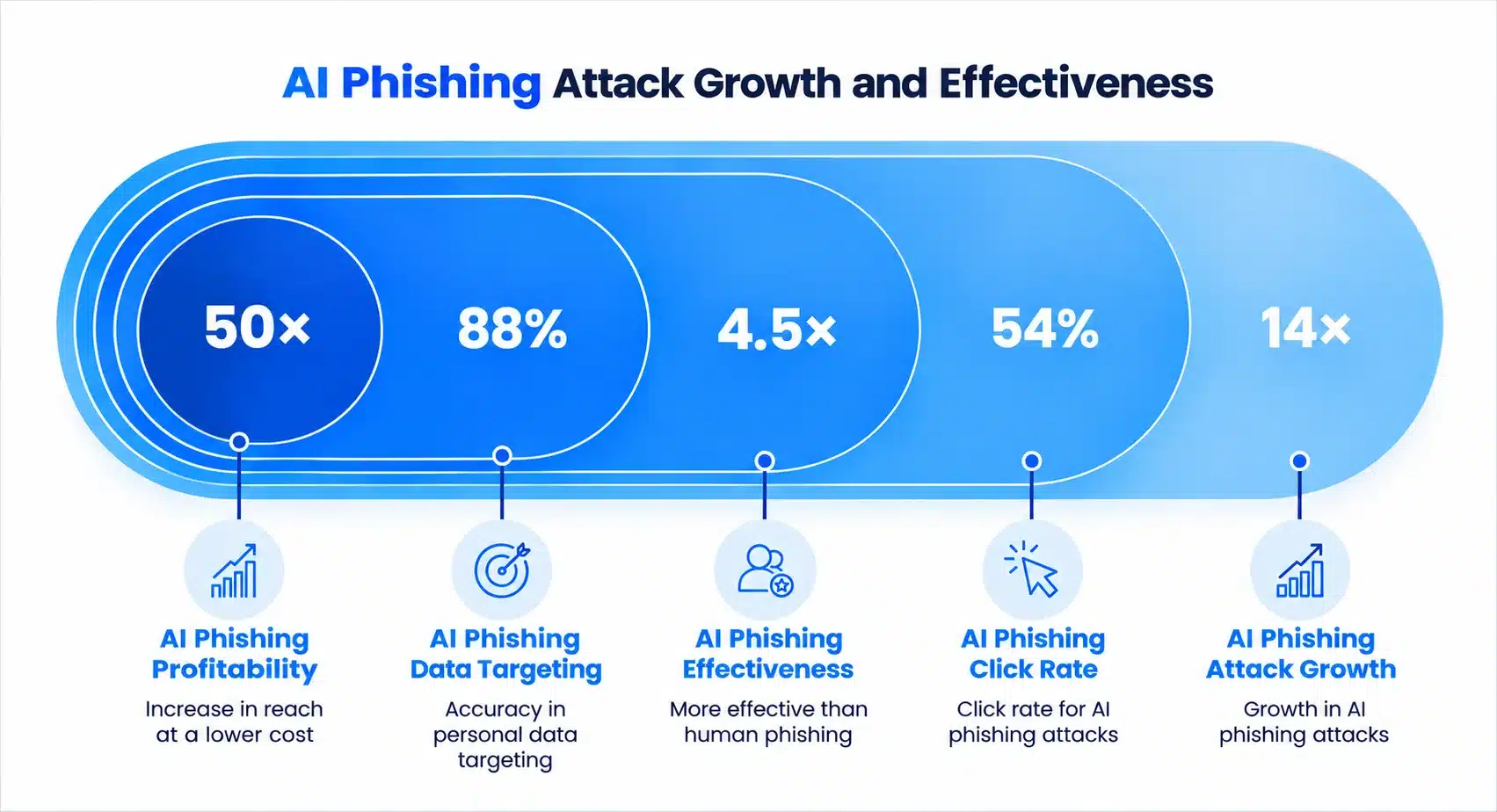
Sources: Heiding et al., 2024; Hoxhunt, 2026
Indicators of a Spear Phishing Attempt
The article will now pivot to common signs of general and spear phishing attempts. If we recall, spear phishing is typically aimed at a particular target user or a carefully selected group of users. Communications are targeted toward the user’s role in the organization, the systems or application access that the intended target is likely to possess, or the business functions they are expected to carry out. Spear phishing will often exhibit signs of uncharacteristic urgency, such as a finance manager being asked by the CEO to approve a high-value, past-due vendor invoice or a customer account manager being asked to credit an impostor customer with funds they were not legitimately owed. Another subtle red flag specific to spear phishing includes slightly altered domains; for example, a customer or contact email address is “parceltrack.com,” but the impostor domain is “parcel-track.com,” which is visually similar enough to entice clicks or allow user oversight to creep in when not carefully analyzing sender details. Technical indicators of spear phishing include hyper-specific content tailored to the recipient, such as a link that redirects to a file-sharing service, such as Dropbox, with the user’s email prepopulated in the username field, odd branding, low-quality imagery, or use of URL shorteners to disguise links. Some additional behavioral and content-specific indicators of a spear phish may also include the below elements:
- High degree of personalization (scraping LinkedIn, Facebook, Instagram, etc.)
- Pretexting or impersonating known vendors or contacts
- Unusual sender timing
- Suspicious attachments (Word document or PDF with only a QR code, etc.)
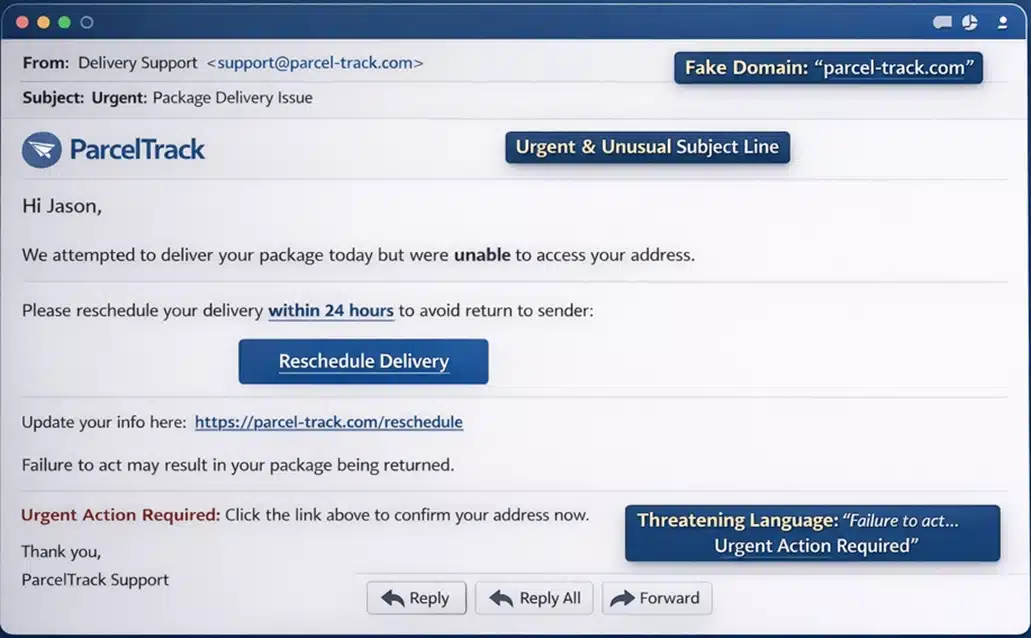
An AI-generated spear phishing email is often harder to detect when scanning for traditional cues because it lacks the common human limitations those cues rely on. Unlike people, AI doesn’t typically express emotional leakage, inconsistency due to memory gaps, or uneven writing quality. Instead, AI will produce fluent, grammatically correct, and stylistically adaptable text that mimics human patterns without a stable personal voice, making common signs of inauthenticity much less visible in written communications; however, AI-generated manipulation may be much easier to detect in recorded audio. Now that we have identified some of the common indicators of spear phishing, let’s find out the phishing protection mechanisms that organizations can implement, beginning with people and then addressing technical controls.
The Human Layer: Security Awareness and Behavioral Defense
The cybersecurity and public research community is often split on whether security awareness training or routine phishing simulations lead to positive security outcomes concerning phishing prevention or the mitigation of social engineering attacks. A study involving 19,500 employees at a healthcare organization concluded that static, annual training programs and even embedded anti-phishing training exercises produced no notable positive differences between users who received training versus those who did not (Ho et al., 2025). These findings may be challenged by cybersecurity awareness training platforms or phishing simulation providers based on the interventions and metrics used. Given this contrast, how do we effectively manage the human element in 2026 with advanced AI threats assisting threat actors? Pitting AI against AI may be a useful trick. Companies can leverage multi-channel approaches, such as GenAI voice-cloning simulations, email, SMS, or agentic AI conversational exercises, which provide employees with highly engaging exercises that drive positive behavioral changes (Brightside, 2026). This multi-channel approach may include some of the elements outlined below for increased effectiveness.
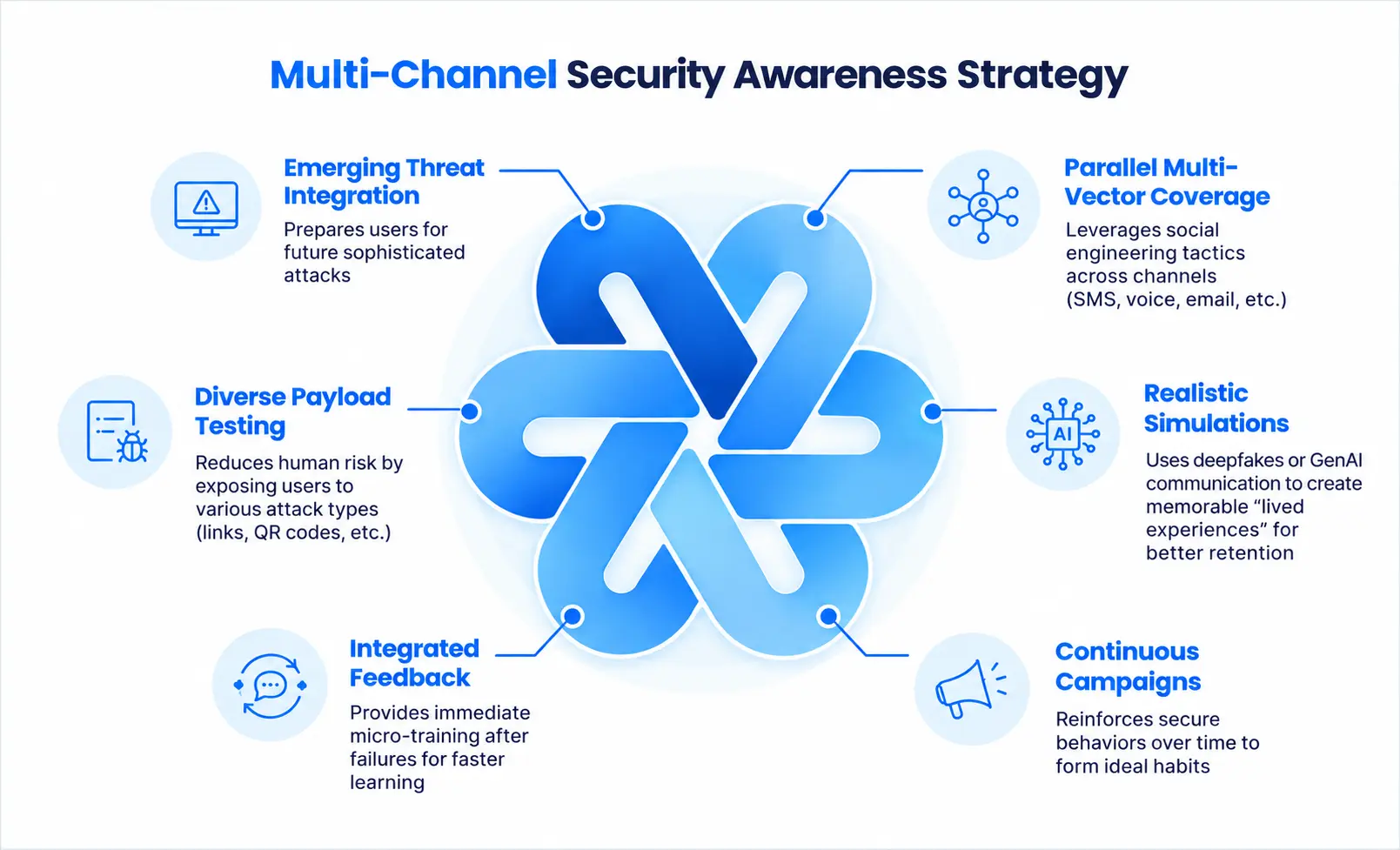
Beyond platforms that help develop, manage, and deliver cross-channel security or phishing awareness training, the ability to effectively measure results over time remains crucial. Common approaches for measuring the effectiveness of simulated phishing programs typically center on dividing the average reporting rate by the average failure (click) rate, with a score of 14 recommended as a top-tier target, indicating a 70% reporting rate and <5% failure rate (Pan, 2022). A ‘no-blame’ security culture promotes active reporting of security concerns. These steps taken alongside a robust security awareness platform are expected to drive positive behavioral changes in personnel against sophisticated social engineering threats.
Implementing Technical Controls and Layered Defense Strategies
AI-generated spear phishing is getting harder to spot because messages look more natural, are highly personalized to the intended target, and often mimic human writing styles. This means defenses can no longer rely on just user awareness training. Organizations also require layered, robust technical controls while also assuming some attacks may succeed. Modern email filtering gateways and associated security tools act as a first line of defense. Traditional email filtering capabilities look for known malicious signatures, such as a poor sender or IP address reputation, but modern AI-driven email defenses go further by analyzing:
- Writing patterns and anomalies in tone or context
- Sender behavior (e.g., unusual sending times or locations)
- Relationship mapping (who normally emails whom)
This is especially important for defending against AI-generated phishing because the content may be grammatically perfect and can be highly convincing. AI-based defenses can detect subtle inconsistencies that humans might overlook, such as a CEO emailing in a slightly “off” style or from an uncommon device, geolocation, and IP address. Should a phishing attack succeed in stealing credentials, multifactor authentication (MFA) acts as a strong backstop. Conditional access policy paired with MFA enforcement requires attackers to leverage a second factor (e.g., a phone, an authenticator app, or a hardware key) before authentication can succeed, significantly reducing the usefulness of stolen passwords. Additional considerations include implementing Zero Trust principles, which assume no user or device should be inherently trusted, even after login. An example policy might involve least privilege, which limits what an attacker may access if an account becomes compromised. Continuous verification policy may check user or device behavior (location, device, activity patterns) throughout a session or at defined intervals, triggering an MFA prompt for the user or possibly disabling user access if confidence in a user compromise reaches a certain threshold.
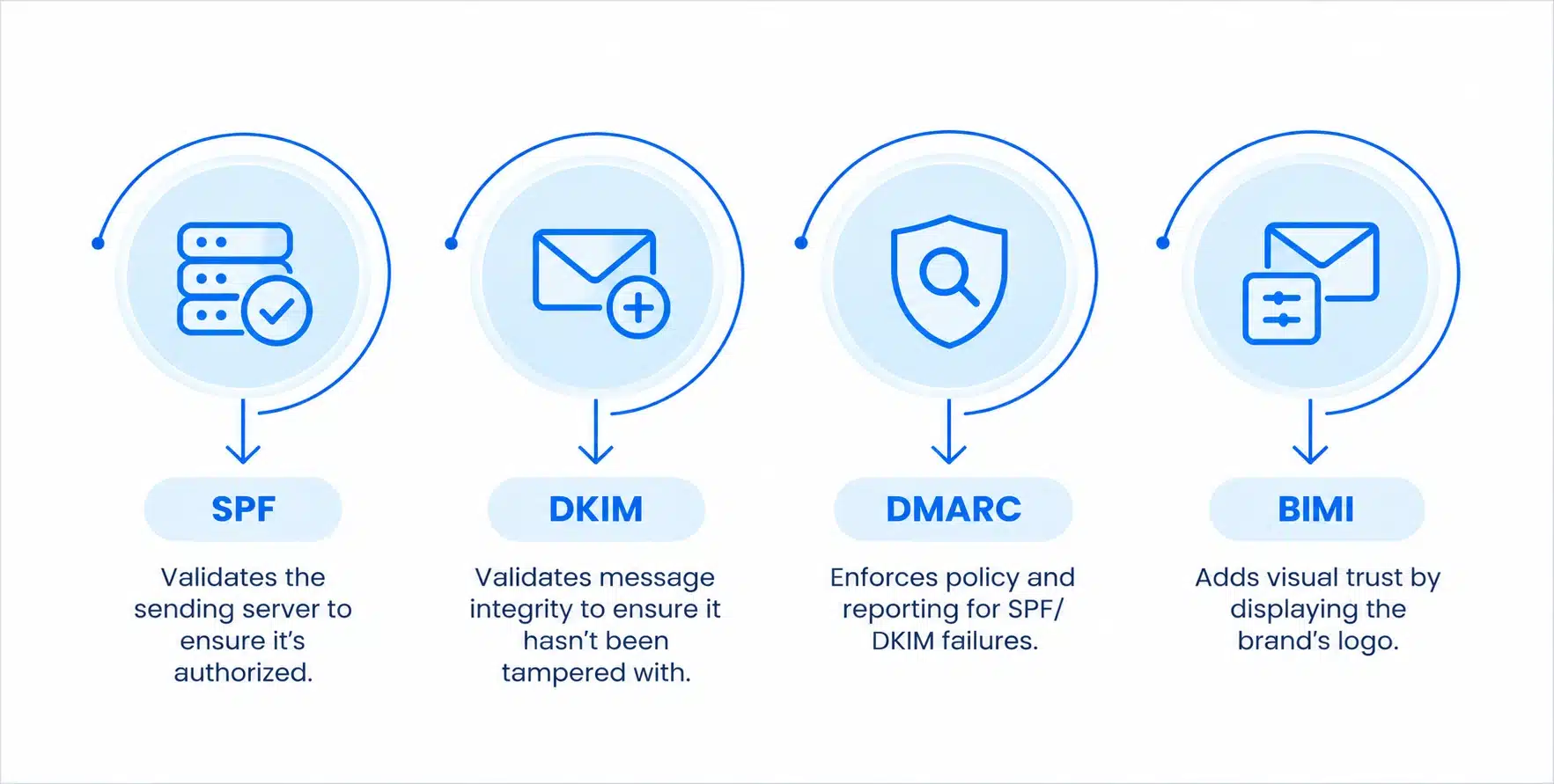
Additional technical controls relevant to defending against spear phishing include domain-level protections or implementations, such as Sender Policy Framework (SPF), DomainKeys Identified Mail (DKIM), Domain-based Message Authentication, Reporting & Conformance (DMARC), and Brand Indicators for Message Identification (BIMI). These four strengthen organizational email security, even considering AI-powered threats. The order for implementing these practices can vary, starting with initial SPF/DKIM signing as a foundation, followed by the DMARC enforcement layer. BIMI is often optional, with the following graphic further illustrating how these protections work in tandem to bolster email security against spoofing, impersonation, or unauthorized senders.
Additional Incident Response & Reporting Best Practices
Organizations should ensure they have documented policies, processes, and operational workflows to help them respond successfully to a spear phishing attack. Whether implemented as an organization-wide policy or even implemented via a brown bag session and company townhalls, users should understand their reporting responsibilities if they recognize they have fallen prey to a social engineering attack, whether spear phishing or a fraudulent phone call. Essential reporting steps users can take may focus on the following initial actions:
- Immediately after interacting with a phishing email, users should act quickly to limit potential damage, including:
- Stop further interaction
- Avoid entering additional information
- Report the incident through the organization’s designated channel (such as a “report phishing” button or where to send a security email)
- If credentials were entered, users should know how to promptly change their password using self-service password reset functions.
Internal reporting workflows should be clear and simple, ensuring that reports reach security teams without delay and that they trigger predefined escalation paths based on severity (e.g., credential compromise vs. simple link click). These workflows allow security teams to quickly assess scope, notify affected systems or stakeholders, and initiate containment procedures.
Phishing containment steps typically include forced credential resets, session/token revocation to log out active sessions, account disablement, and device isolation if malware execution is suspected or directly confirmed, preventing lateral movement across the network. Rapid response will remain critical because many phishing attacks aim to exploit access within minutes or hours of a user compromise scenario, meaning early detection and containment can significantly reduce financial loss, data exposure, and operational disruption. Additional steps will also include blocking malicious indicators of compromise (IOC), such as email sender addresses and domains, file attachments, links, and IP addresses. It will also remain crucial that any IOCs identified during the course of a spear phishing investigation are the subject of threat hunts to ensure that threat actors are fully contained. This will require that searches for device file, device network, and URL-click events are exhaustively performed against the organization’s endpoint detection and response (EDR) and/or security information and event management (SIEM) tools to identify, contain, and remove known attacker activity and artifacts from the network. After the incident is resolved, organizations should conduct a post-incident review to analyze what happened, identify gaps in user awareness or technical controls, and refine security training approaches, threat detection rules, and security incident response processes. This cycle of continuous improvement strengthens overall resilience to spear phishing attacks and serves to prevent similar security incidents in the future.
To conclude, the organizations that succeed in this new era of AI-driven spear phishing are not those trying to perfectly prevent every attack. They will be the ones that engineer resilience into every layer of their human and technology environments. As adversaries leverage AI to scale personalization, mimic trusted voices, and bypass traditional defenses, cybersecurity must shift from static controls of the past to highly adaptive, intelligence-driven ecosystems. This will require organizations to effectively correlate identity signals, behavioral analytics, and endpoint telemetry in real time to detect what doesn’t belong, even when everything appears legitimate on the surface. In this landscape, trust is no longer granted; it will require continuous evaluation.
More importantly, the human element must evolve alongside the technology landscape. Employees are no longer just the last line of defense; they must become active participants in a dynamic security system to protect themselves and organizational resources. When supported by realistic, AI-powered training and a culture that rewards rapid reporting over silent failure, users become high-value sensors that amplify detection capabilities across the organization. The future of phishing defense is not about eliminating risk entirely, as this is unrealistic, but about shrinking attacker dwell time, reducing blast radius, and making every attempted compromise increasingly costly and highly ineffective. Organizations that embrace this mindset will be ready to defend against AI-powered threats.
Ethical Hacking Simulations Help Build Better Phishing Prevention Controls
FAQs
What are some common spear phishing examples?
Typical examples include fake invoice requests, changes to vendor payment details, credential reset links, and requests to update address to avoid delivery returns.
What can be done to improve spear phishing prevention in 2026?
Effective spear phishing prevention involves implementing MFAs, advanced email filtering, continuous role-based simulations, time-based access controls, and DMARC, SPF, DKIM, and BIMI enforcement layers.
How does phishing awareness training reduce risk against AI‑generated lures?
Continuous phishing awareness training is helpful when combined with multi-vector simulations and no-blame reporting to reduce click rates as AI-generated phishing attacks improve in quality.
Can ethical hacking practices help defend against spear phishing?
Ethical hacking exercises validate skills in social engineering testing, reconnaissance, and incident response, which help security teams design stronger spear phishing prevention controls.
References
Adaptive Security. (2026, February 11). Spear Phishing Explained: How Targeted Attacks Bypass Defenses. https://www.adaptivesecurity.com/blog/spear-phishing-explained-how-targeted-attacks-bypass-defenses
Brightside. (2026, February 06). Multi‑Vector Security Awareness Training: The 2026 Guide to Phishing, Smishing, and Vishing Simulations. https://www.brside.com/blog/the-2026-guide-to-phishing-smishing-and-vishing-simulations
Heiding, F., Lermen, S., Kao, A., Schneier, B., & Vishwanath, A. (2024, November 30). Evaluating Large Language Models’ Capability to Launch Fully Automated Spear Phishing Campaigns: Validated on Human Subjects. arXiv. https://arxiv.org/pdf/2412.00586
Ho, G., Mirian, A., Luo, E., Tong, K., Lee, E., Liu, L., Longhurst, C. A., Dameff, C., Savage, S., & Voelker, G. M. (2025). Understanding the Efficacy of Phishing Training in Practice. UC San Diego. https://www.sysnet.ucsd.edu/~voelker/pubs/phishtrain-oakland25.pdf
Hoxhunt. (2026). Phishing Trends Report (Updated for 2026). https://hoxhunt.com/guide/phishing-trends-report
IBM. (2025). Cost of a Data Breach Report 2025: The AI Oversight Gap. https://www-api.ibm.com/adobe/assets/urn:aaid:aem:607b9590-38e0-4c91-b433-aa8a17f5b5e8/original/as/cost-of-a-data-breach-2025-full-report.pdf
Pan, S. (2022, March 30). Resisting Phishing Bait Is Not Enough, You Need Users to Report It. SecureWorld. https://www.secureworld.io/industry-news/resisting-phishing-bait-not-enough
About the Author

Adam Kohnke
CEO of XL Security Consultancy
Adam Kohnke is the CEO of XL Security Consultancy, focusing on the performance of cyber risk management engagements, ethical hacking, physical security assessments, and cybersecurity education. When not battling the forces of evil, Adam enjoys camping, hiking, reading high fantasy novels and spending time with family.